
Ceiling Lights: The Fixture Is Not the Light
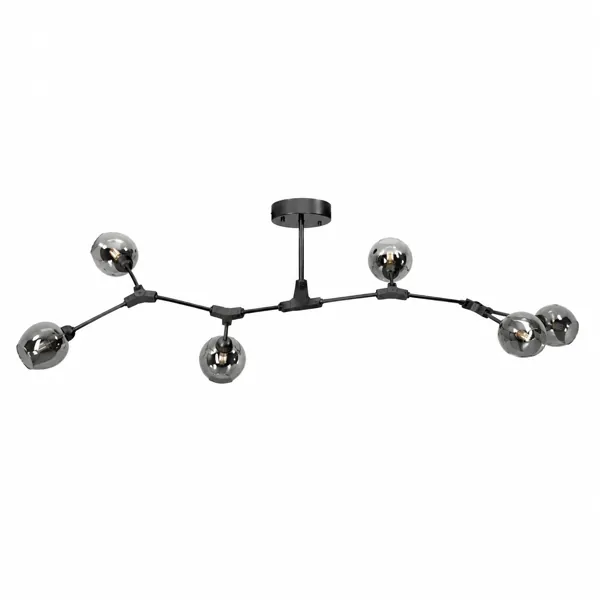
A chandelier or pendant plays two roles in a render, and they are easy to confuse. It is an object, with a silhouette, a finish and a scale that has to suit the room. It is also, as far as the viewer is concerned, the light source. In practice the most convincing results come from treating those two roles separately.
Start with the object. Ceiling fixtures are read against the ceiling and against whatever sits under them, so their size is judged relative to the table, the bed or the seating group they belong to. A common rule of thumb in lighting design is that a pendant over a dining table should be somewhat narrower than the table itself, leaving clear space at each end, and that it should hang high enough for people seated at the table to see across it without looking through the glass. Hung too high, a pendant loses its connection to the table and looks like it belongs to the ceiling; hung too low, it blocks the very view the camera is usually taking. A large multi-arm chandelier needs more headroom than it first appears to, and a branch or sputnik fixture with long arms can easily crowd a small dining space.
Then the materials. Most ceiling lights are metal and glass, and both depend on their surroundings. Smoked and ribbed glass shows its character through what it darkens and distorts, so it needs something behind it; against a plain white ceiling it can disappear. Clear crystal and cascade fixtures need small, bright sources to sparkle, and in a scene lit only by broad, soft light they turn grey. Brushed brass and bronze want a visible highlight along their curves, which usually means at least one directional light in the scene rather than an environment map alone.
Now the light itself. The bulbs inside a fixture are small, and making them the only illumination in a room tends to produce noisy renders and harsh hot spots. The usual solution is to let the bulbs glow — a modest emissive material or a small, low-intensity light inside each shade — so the fixture reads as switched on, and to light the room with larger sources placed where the fixture would plausibly be casting light. The viewer believes the chandelier is lighting the table; the renderer is doing something more sensible.
Colour temperature ties the two together. A warm glow inside amber or smoked glass reads as evening and domestic; a cooler white suits a kitchen or an office. What breaks the illusion is a mismatch: a warm, glowing fixture over a table lit in cold daylight, or several fixtures in one room glowing at different temperatures because each was set up on its own.
Repetition is the last point, and here the usual advice reverses. Pendants are often hung in pairs or rows over an island or a long table, and identical spacing and height are correct, unlike loose furniture. The fixtures should line up with the table or counter underneath them, not with the walls of the room.
Ceiling lights in the Laruus catalogue, from branch chandeliers to glass pendants, come with their glass and metal materials already set up, so the work that remains is the lighting around them.
71
Related assets from the catalogue
Ready-to-render models and seamless textures covering what this article discusses.
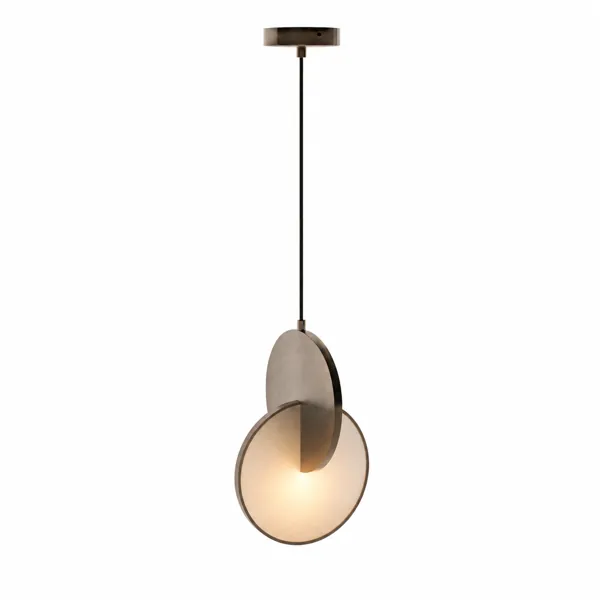
Modern Disc Pendant Light – Bronze & Warm Diffuser 3D Model
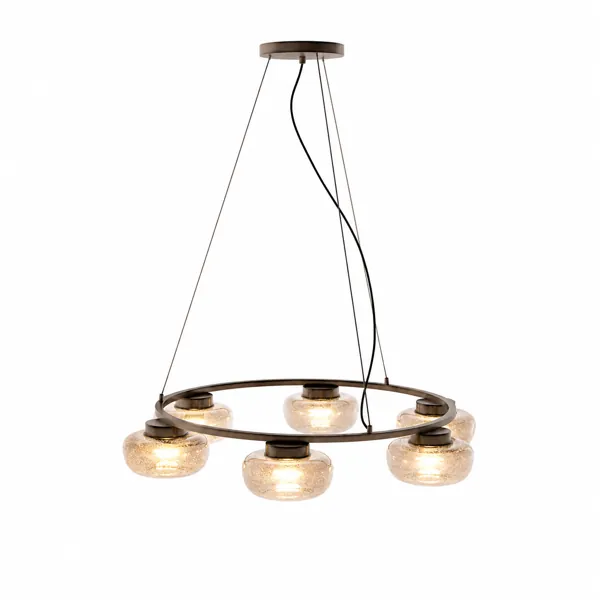
Bronze Ring Chandelier – Six Textured Glass Lights 3D Model
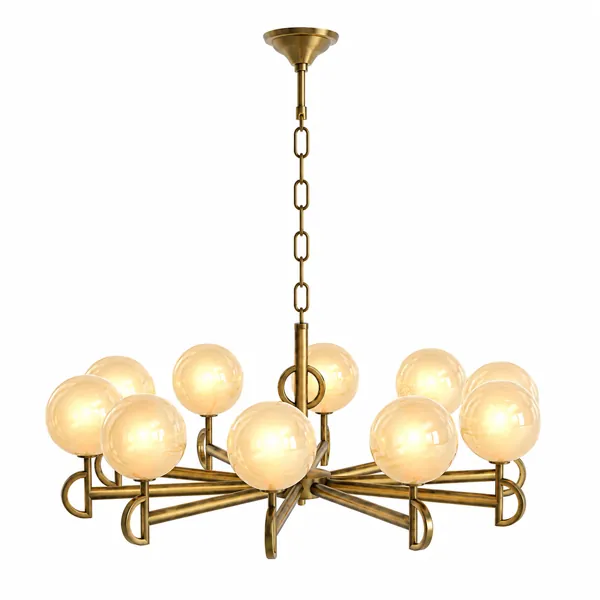
Antique Gold 10-Globe Chandelier 3D Model
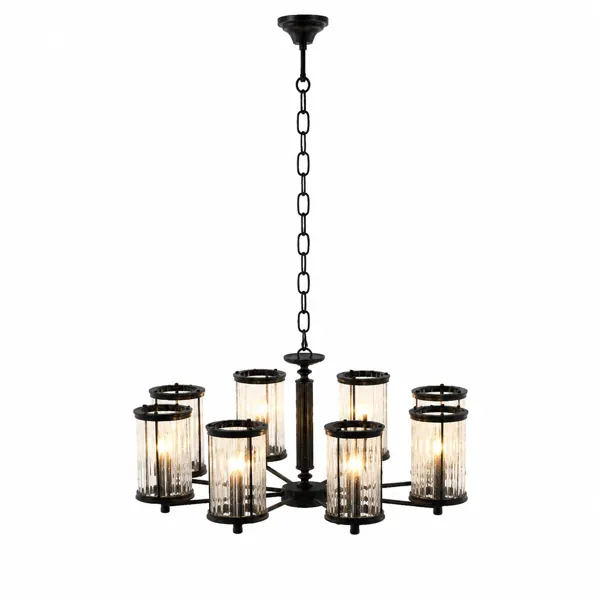
Black 8-Light Ribbed Glass Chandelier 3D Model
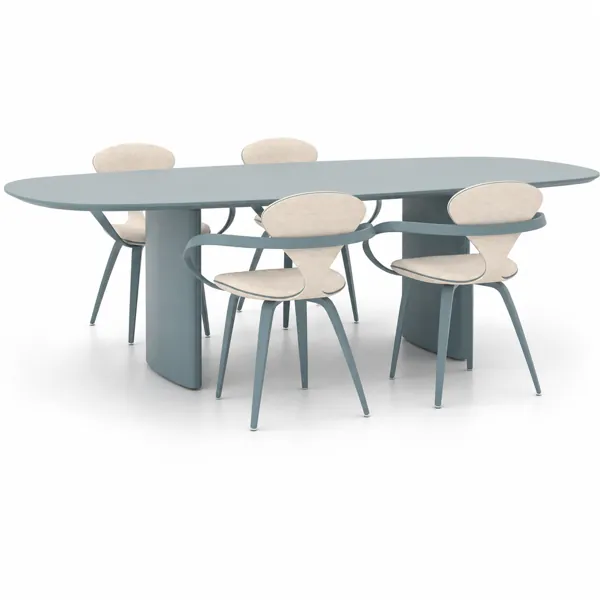
Dusty Blue Oval Dining Set – Beige Wraparound Chairs 3D Model
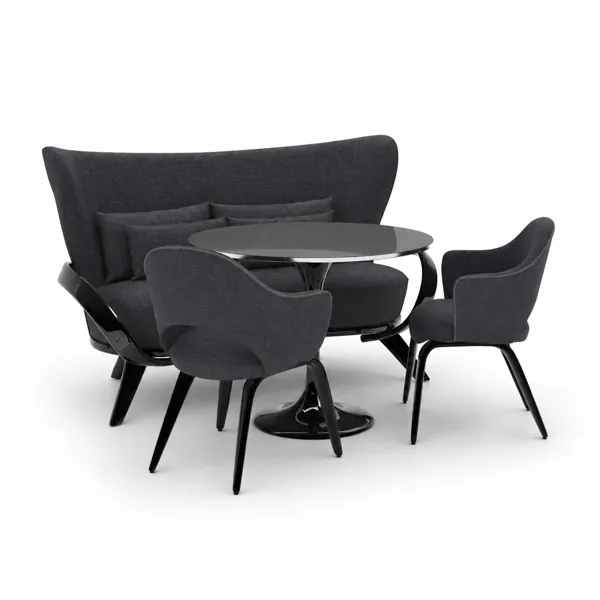
Charcoal Curved Banquette Dining Set – Glossy Black Pedestal Table 3D Model
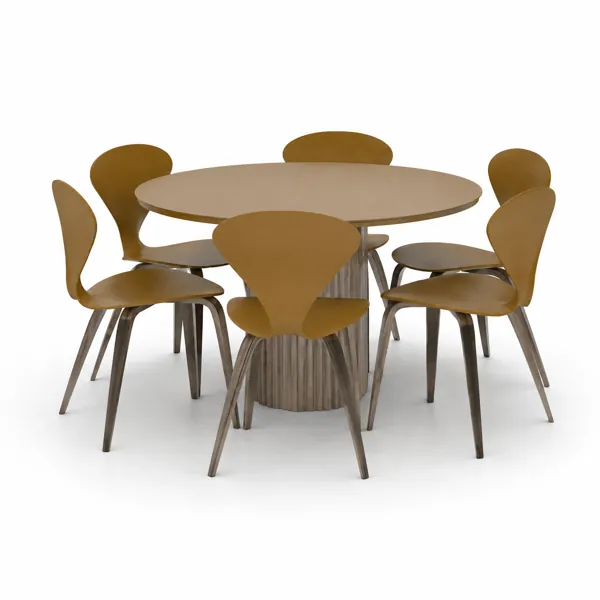
Mustard Sculpted-Back Round Dining Set – Fluted Wood Pedestal 3D Model
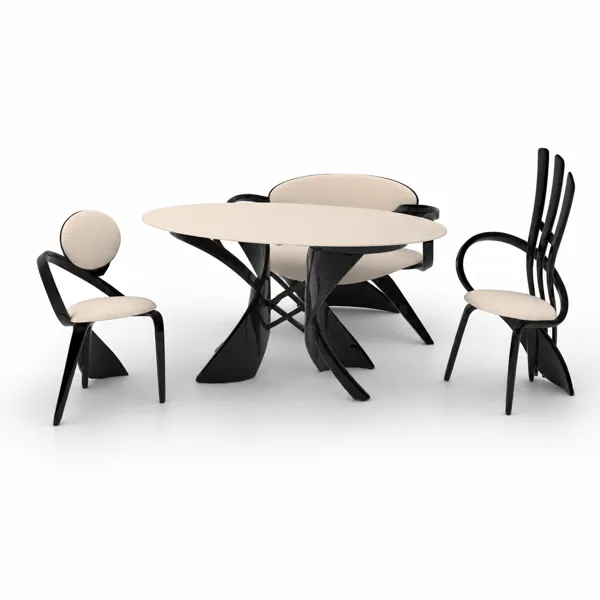
Ivory Oval Dining Set – Glossy Black Ribbon Chairs 3D Model