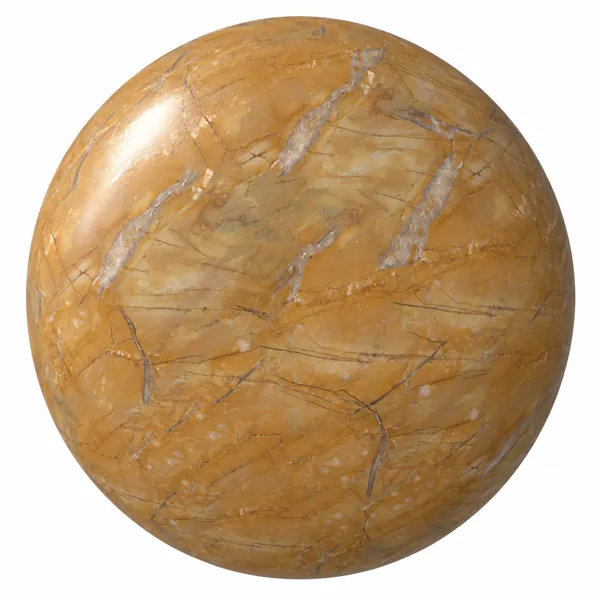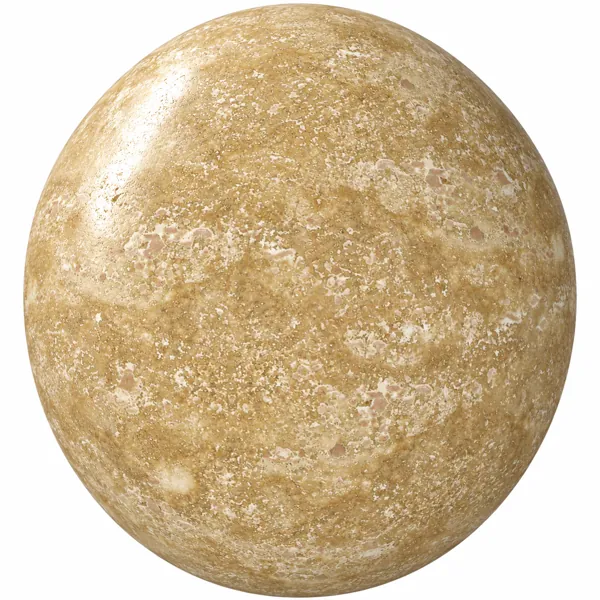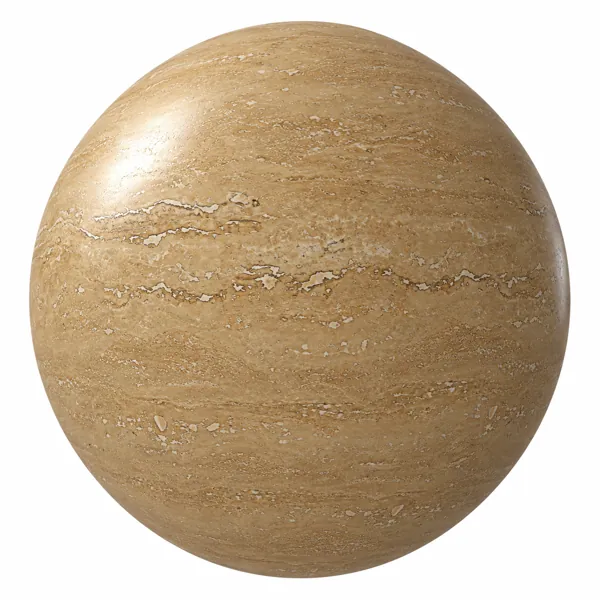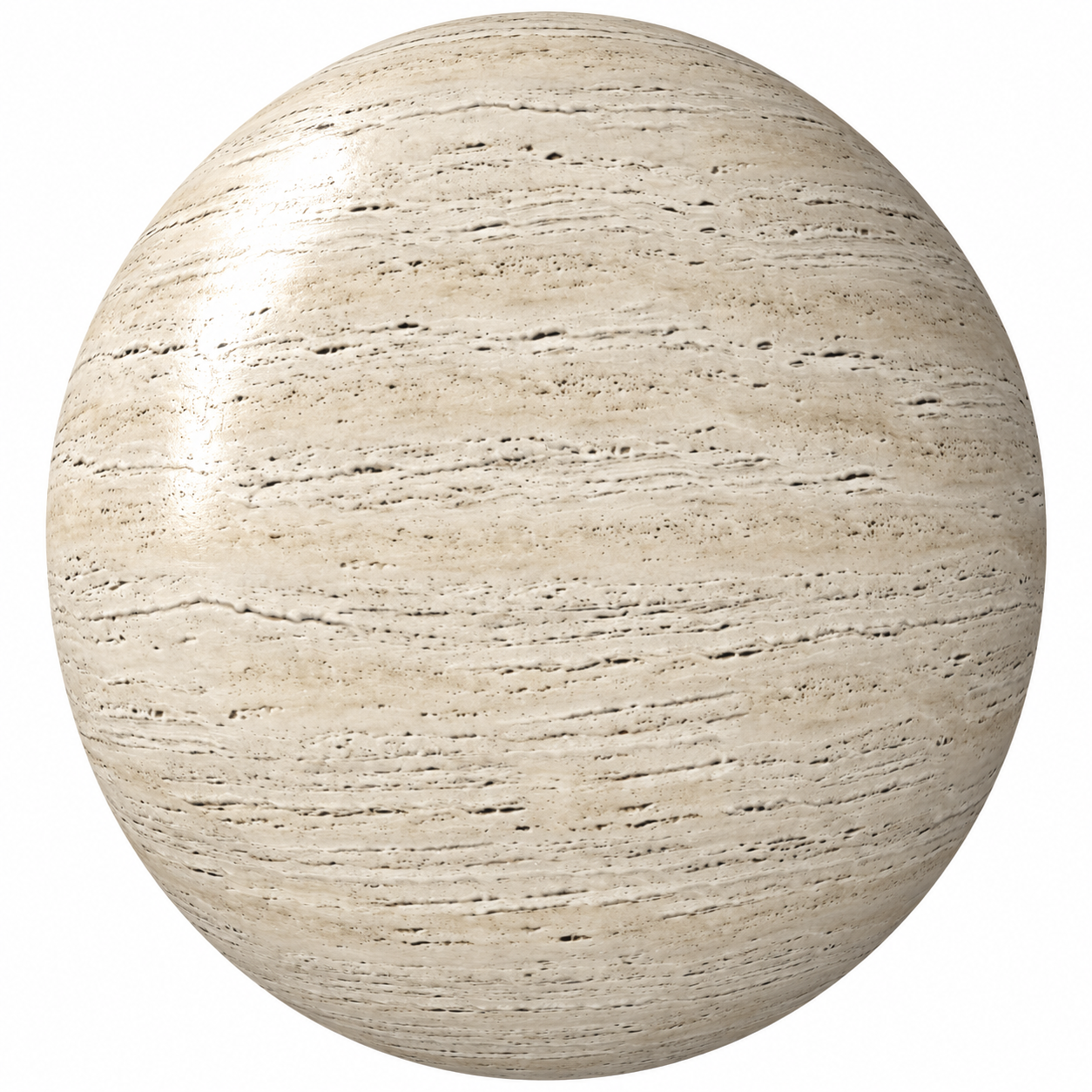
Ivory Cream Travertine with Fine Dark Linear Pores Texture
Travertine No. 00043
FREE
Specifications
- Brand
- Laruus
- Style
- Modern
- Material
- Stone, Travertine
- Suitable spaces
- Living Room, Bedroom, Office, Cafe, Commercial, Kitchen, Entrance
- Color
- BeigeWhiteGrayBlack
- File types
- Albedo MapAlpha MapAO MapBump MapDiffuse Color MapEdge MapEmission MapHeight MapMetallic MapNormal MapPacked Texture MapRoughness Map
Ivory Cream Travertine with Fine Dark Linear Pores Texture - High Resolution Seamless PBR Textures
Description
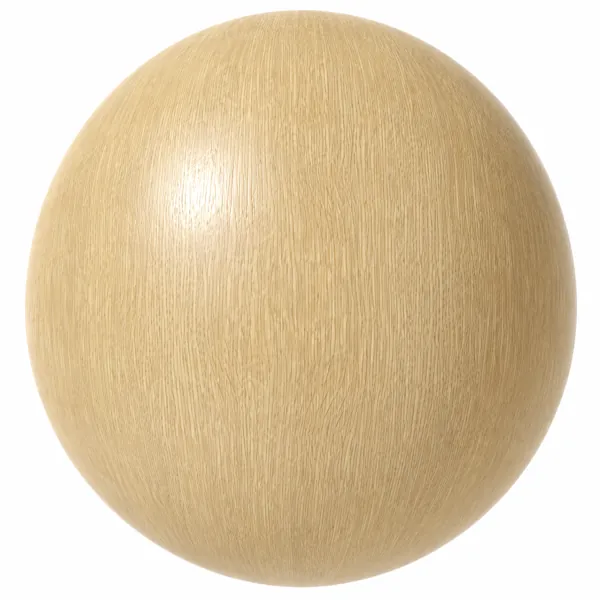
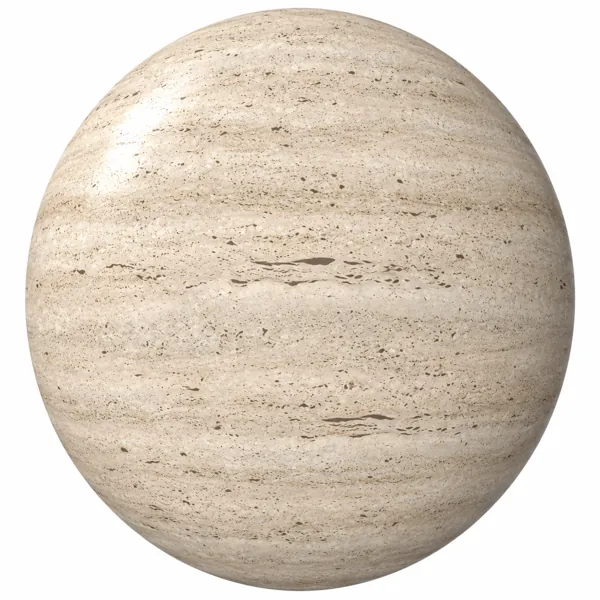
The Ivory Cream Travertine with Fine Dark Linear Pores Texture features a pale natural stone appearance distinguished by its soft ivory background, delicate beige sedimentary layers, and numerous narrow dark pores arranged along gently irregular horizontal lines. The surface combines a light cream foundation with subtle warm mineral variations, producing a calm yet detailed travertine pattern. Unlike darker or strongly banded travertine varieties, this texture relies on the contrast between its luminous stone-colored base and small charcoal-gray openings that follow the natural direction of the layers. Fine interrupted streaks, scattered pinhole markings, and softly undulating veins contribute to its recognizable character. The restrained coloration makes the material particularly relevant to modern, minimalist, and contemporary architectural compositions where natural texture is desirable without introducing strong color contrasts.
The visible stone structure consists of closely spaced, predominantly horizontal sedimentary markings that occasionally rise or fall in gentle waves. Cream and light beige areas blend into one another, while fine grayish lines and elongated dark cavities create additional definition. Many of the darker marks appear as short, broken linear pores rather than broad continuous veins. Their irregular spacing produces a distinctive combination of natural variation and directional consistency. Small speckled areas are distributed between the longer horizontal formations, adding another level of surface detail. The image shows repeated arrangements of similar lines and pore clusters, which should be considered when mapping the texture across large surfaces. The physical size of individual pores, the exact stone finish, and the real-world dimensions of the pattern cannot be established from the color image alone. Material scale should therefore be calibrated to the geometry and intended architectural application.
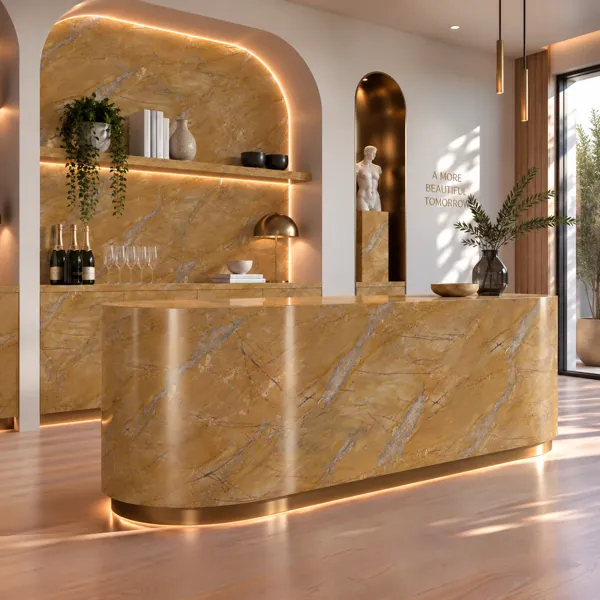
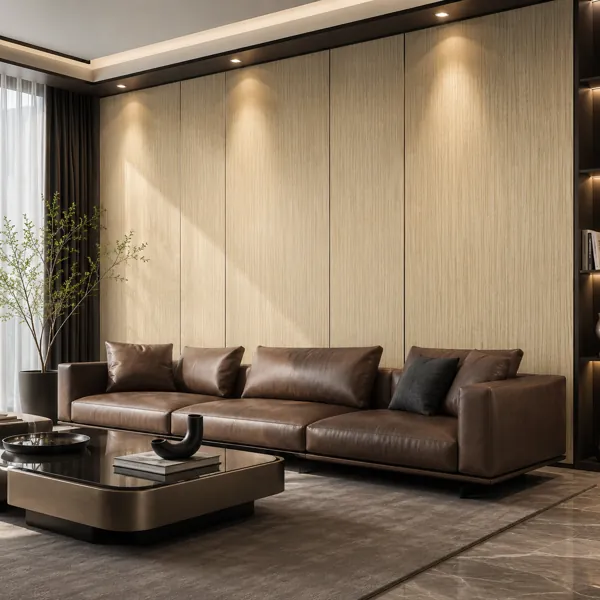
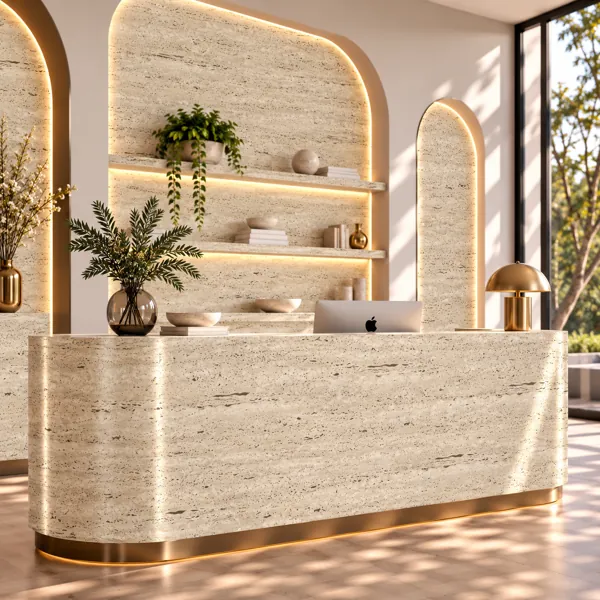
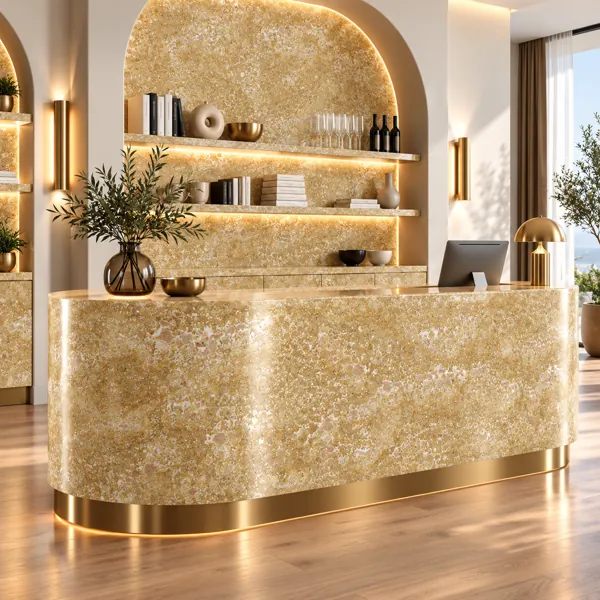
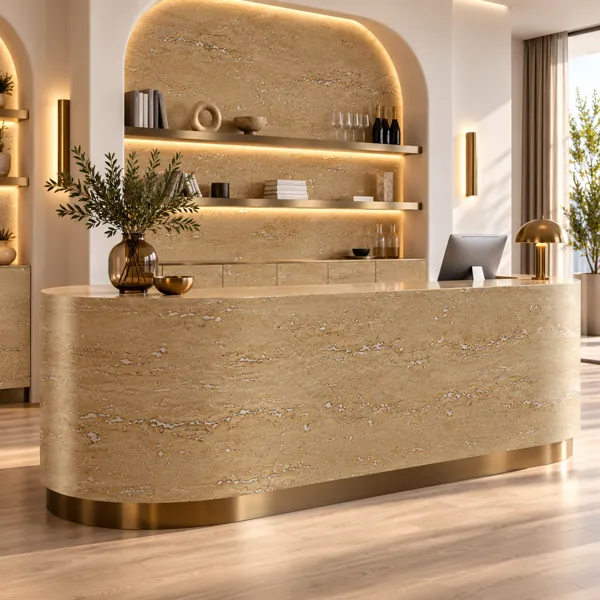
This ivory travertine texture can be used to visualize stone wall cladding, fireplace surrounds, bathroom vanities, kitchen islands, countertops, decorative panels, shelving, and architectural furniture. Its light neutral palette is especially appropriate for interiors that emphasize openness, daylight, and understated material transitions. In living rooms, the texture can introduce natural detail to feature walls and built-in furniture. In bedrooms, it can be applied to headboard walls or integrated stone elements. Kitchens and commercial interiors may use the material appearance for counters, reception desks, and display surfaces. Its horizontal linear pattern is particularly suitable for elongated architectural forms where the direction of the pores can reinforce the visual proportions. For representations of flooring or wet areas, the texture describes appearance only; actual material suitability requires separate physical specifications.
In architectural visualization and CGI workflows, the material offers a recognizable light travertine color reference for developing digital stone surfaces in 3ds Max and compatible rendering applications. Its pale background can respond visibly to changes in lighting temperature, while the dark linear pores provide localized contrast in close-up renders. Artists should consider the orientation of the sedimentary pattern when applying the texture to vertical walls, horizontal worktops, or curved objects. UV rotation can change the apparent direction of the stone layers and influence the overall architectural composition. Maintaining consistent mapping scale across adjacent surfaces helps preserve material coherence. On large uninterrupted panels, repeated pore arrangements should be inspected for visible duplication. Camera distance, tone mapping, and lighting conditions also influence how strongly the small dark markings appear in the final image.
Within contemporary interior design, ivory cream travertine provides a soft connection between warm white surfaces, beige furnishings, and natural wood finishes. It can be paired with light oak, walnut, brushed bronze, dark metal, linen upholstery, and warm plaster walls. The pale base helps maintain visual brightness, while the narrow gray and charcoal-colored pores introduce enough contrast to prevent the stone appearance from becoming completely uniform. In minimalist spaces, this balance allows the material to function as a quiet architectural background. In hospitality and retail interiors, coordinated stone appearances on reception counters, wall panels, and shelving can support a consistent material palette. Soft daylight can reveal the subtle cream and beige transitions, while grazing artificial light may draw attention to the directional markings. The supplied image does not establish whether the actual stone is polished, honed, brushed, filled, or unfilled.
The provided image represents the Diffuse Color appearance of the travertine surface. The specified Albedo, Alpha, AO, Bump, Diffuse Color, Edge, Emission, Height, Metallic, Normal, Packed Texture, and Roughness maps should be checked in the delivered material files. A single color image cannot confirm the presence of every map, physically accurate pore depth, calibrated roughness, or completely seamless tiling. When constructing a PBR material, artists should inspect the available texture maps, configure suitable color-space settings, and test the surface under representative lighting. Bump or Normal information, where available, should be adjusted carefully to avoid exaggerating the small linear cavities. Preserving the ivory cream coloration, delicate beige stratification, and distinctive dark horizontal pores will help maintain the natural visual identity of this travertine texture.
Frequently asked questions
Is this texture free?
Yes. You can download it with a free Laruus account. Free textures are limited to 5 downloads per day.
Which software can I use this texture in?
The maps are standard image files, so they work in any renderer with PBR materials, such as Corona or V-Ray in 3ds Max, Blender, SketchUp with V-Ray or Enscape, and Unreal Engine.
What do I get when I download it?
A 49.5 MB download. It was added to Laruus on November 6, 2026.
Which spaces is it suitable for?
It suits Living Room, Bedroom, Office, Cafe, Commercial, Kitchen, and Entrance projects. Style: Modern.
Are there 3D models that use this material?
Yes. Laruus has 3D models in the same material:
- Stone — 3Browse Architecture (3)