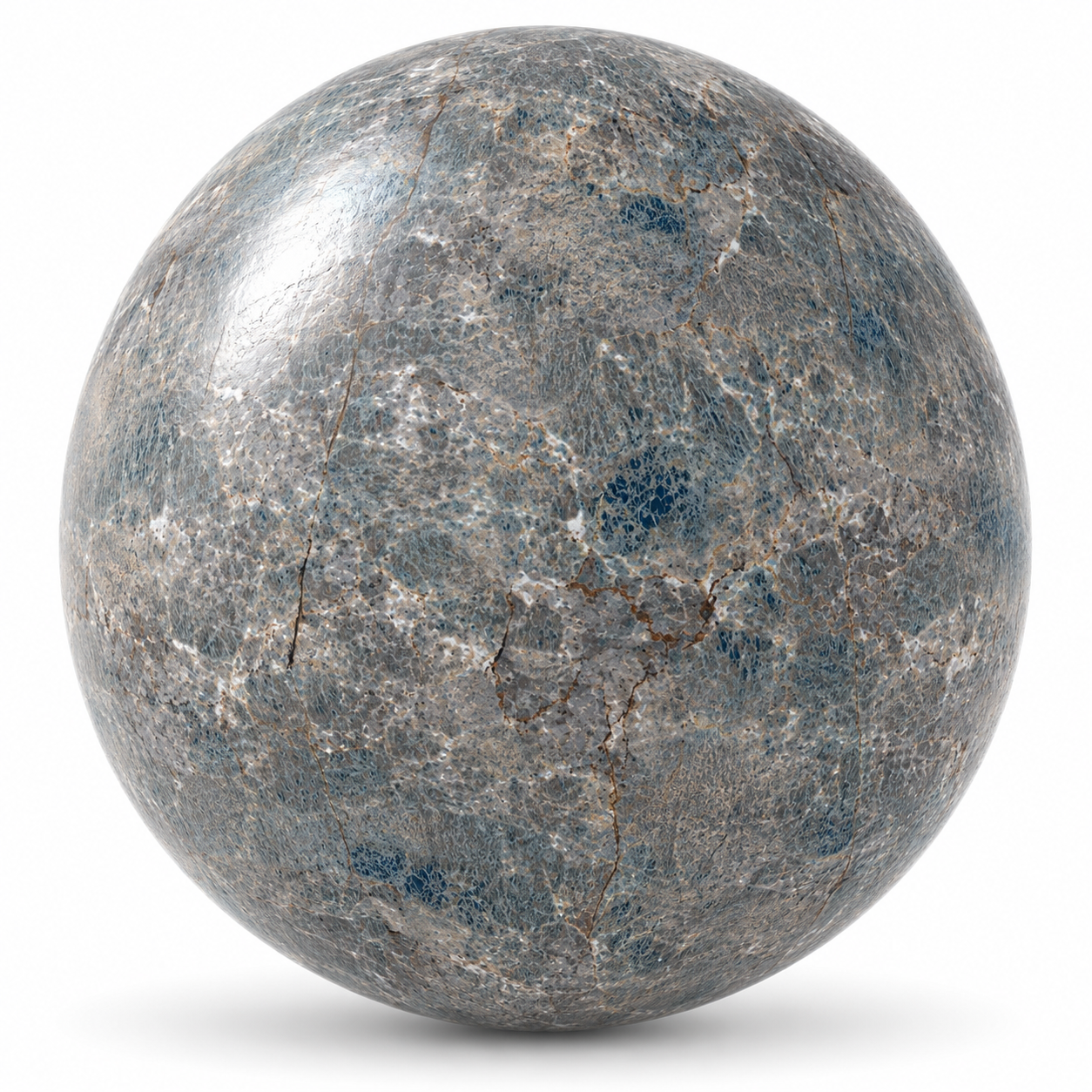
Blue Gray Ceramic Texture – Dense Crackle Veining Texture
Ceramic No. 00012
FREE
Specifications
- Brand
- Laruus
- Style
- Modern
- Material
- Ceramic
- Suitable spaces
- Living Room, Bedroom, Office, Cafe, Commercial, Kitchen, Entrance
- Color
- BlueGrayBeigeBrownWhite
- File types
- Albedo MapAlpha MapAO MapBump MapDiffuse Color MapEdge MapEmission MapHeight MapMetallic MapNormal MapPacked Texture MapRoughness Map
Layered Blue Crackle Character High Resolution Seamless PBR Textures
Description
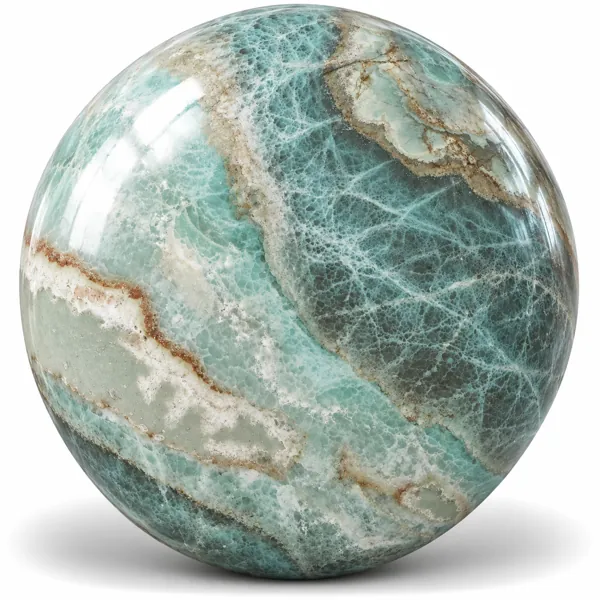
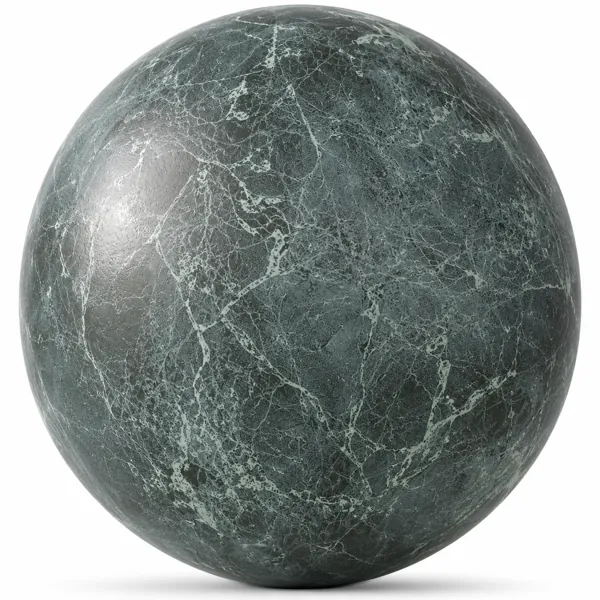
This blue gray ceramic texture is distinguished by dense crackle-like veining, cloudy beige mineral variation, scattered deep blue areas, and fine brown linear accents. Rather than presenting a uniform ceramic surface, the pattern combines irregular cellular details with larger mottled formations, creating a layered appearance that resembles naturally weathered mineral structures. White and pale gray fragments brighten the predominantly cool palette, while warm brown lines cross the surface at irregular intervals. The resulting contrast gives the material a recognizable identity suited to modern interiors where a decorative ceramic finish needs visible complexity without relying on a simple repeating geometric motif.
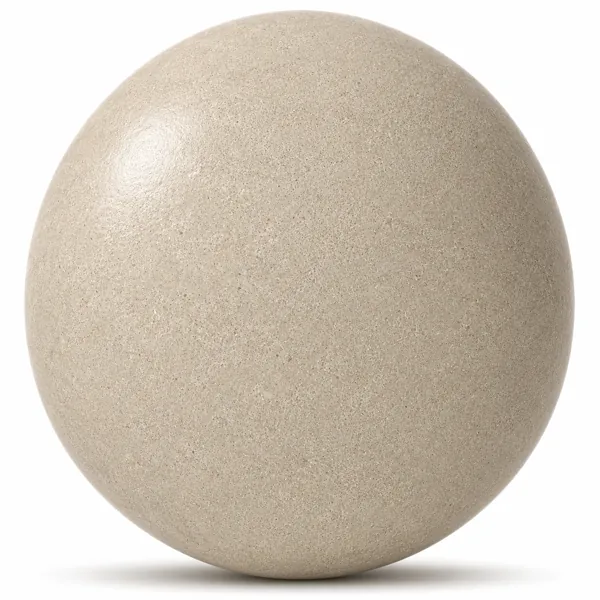
The supplied spherical preview shows a ceramic material with substantial small-scale surface variation and a softly reflective finish. A broad highlight is visible across the upper-left area, indicating that the surface is not completely matte, although an exact gloss or roughness value cannot be determined from the image alone. The visual pattern ranges from tiny interconnected crackle forms to larger blue gray patches and thin brown fissure-like lines. Because no physical dimensions, tile format, thickness, texture resolution, displacement depth, or real-world mapping scale are provided, these properties should not be inferred from the preview and should instead be checked within the supplied asset or adjusted for the intended application.
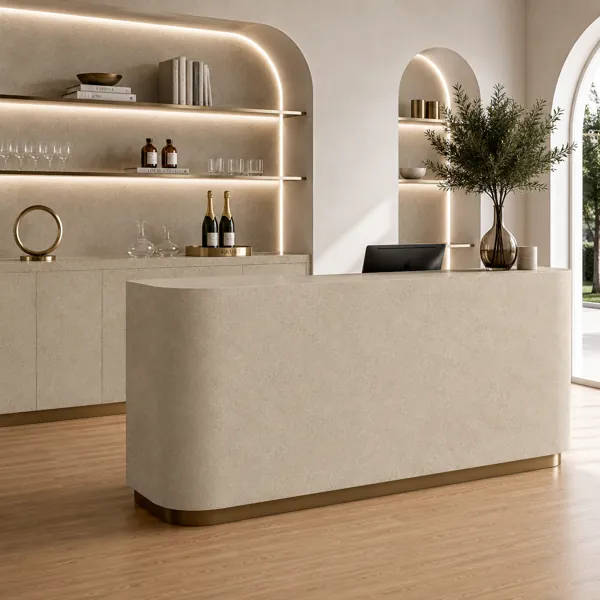
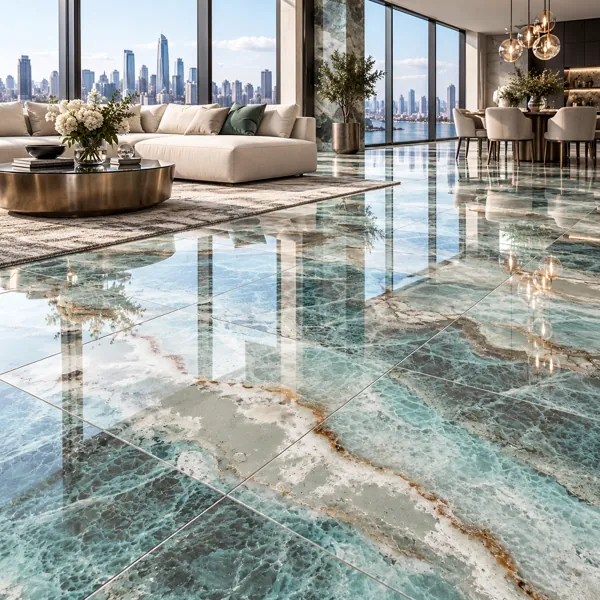
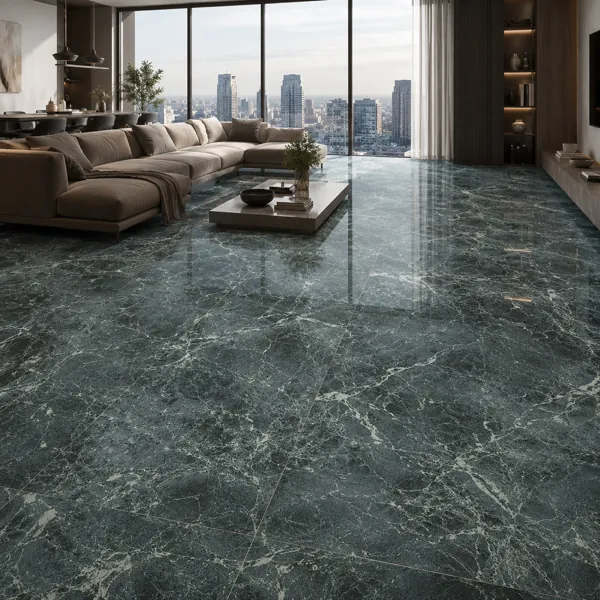
The combination of blue, gray, beige, white, and brown makes this ceramic texture suitable for a broad range of interior applications. It can visually support feature walls, decorative ceramic panels, kitchen surfaces, reception elements, furniture details, counters, and other hard-surface applications when the geometry and mapping are appropriate. Living rooms and bedrooms can use the material as a controlled decorative accent, while offices, cafes, entrances, and commercial environments can benefit from its more intricate mineral-like character. Its cool blue gray foundation can pair effectively with neutral walls, dark or natural wood, metal, glass, beige finishes, and restrained contemporary color schemes.
Within architectural visualization and CGI workflows, the dense pattern provides useful visual information at both medium and relatively close viewing distances. The irregular distribution of blue patches and branching crackle structures can prevent large mapped surfaces from appearing visually flat, while the brown veins introduce directional features that help define the material. On large walls, counters, or panels, artists should review texture orientation and scale carefully so that the visible fissure lines remain proportionate to the modeled object. The material can be integrated into 3ds Max scenes and evaluated with Corona Renderer under the actual project lighting to determine how strongly its reflective character should read.
From an interior design perspective, the surface works particularly well in modern spaces that balance cool neutral materials with warmer accents. Its blue gray coloration provides a subdued foundation, while beige areas soften the palette and brown lines add warmth. The dense crackled pattern is visually active, so it can function effectively as an accent surface alongside quieter finishes rather than requiring additional ornament. Depending on the mapped area, it may appear more mineral and expressive at close range while resolving into a textured blue gray field from farther viewpoints.
The available product information identifies the material as Ceramic, with 3ds Max and Corona Renderer specified for the 3D workflow. No file extensions are listed, so the file_types field remains empty. The preview does not establish whether the texture is seamless, nor does it confirm PBR map types, UV configuration, texture dimensions, scan origin, physical scale, bump strength, displacement setup, or exact reflectivity values. These technical characteristics should therefore be verified directly in the asset before production rendering.
Frequently asked questions
Is this texture free?
Yes. You can download it with a free Laruus account. Free textures are limited to 5 downloads per day.
Which software can I use this texture in?
The maps are standard image files, so they work in any renderer with PBR materials, such as Corona or V-Ray in 3ds Max, Blender, SketchUp with V-Ray or Enscape, and Unreal Engine.
What do I get when I download it?
A 32.0 MB download. It was added to Laruus on June 24, 2026.
Which spaces is it suitable for?
It suits Living Room, Bedroom, Office, Cafe, Commercial, Kitchen, and Entrance projects. Style: Modern.
Are there 3D models that use this material?
Yes. Laruus has 3D models in the same material:
- Ceramic — 23Browse Bathtub (9)