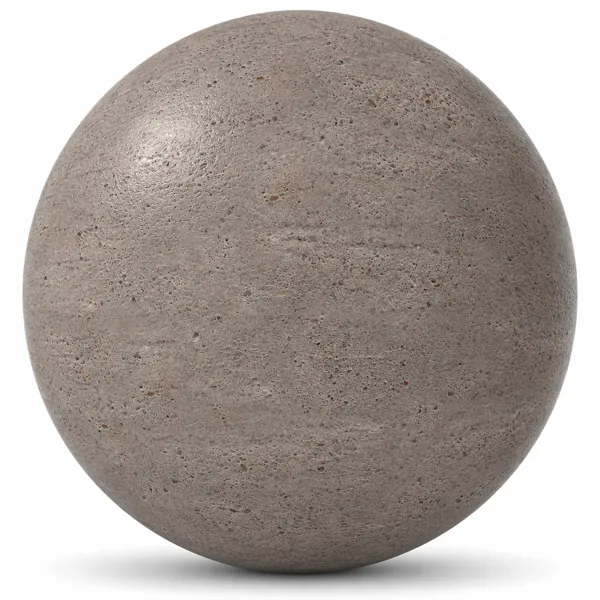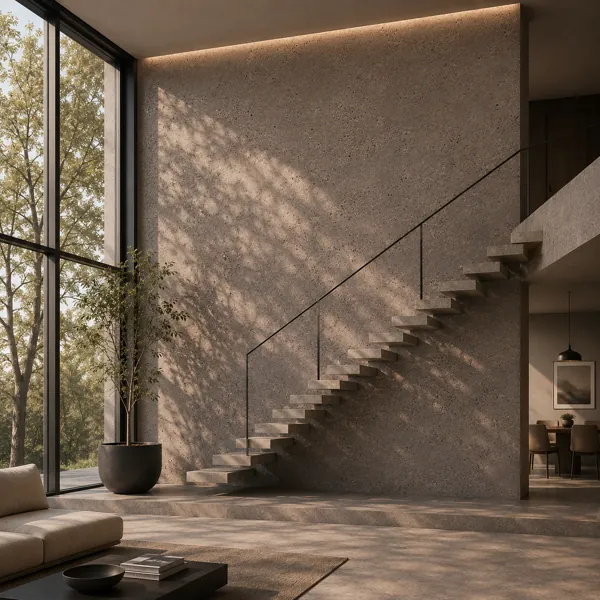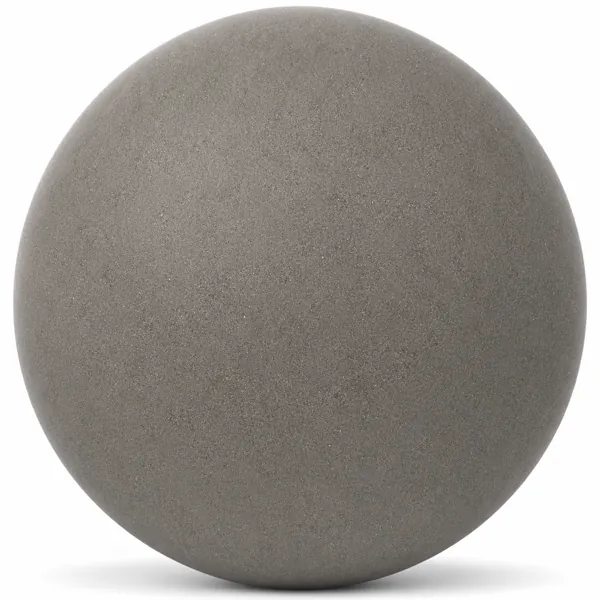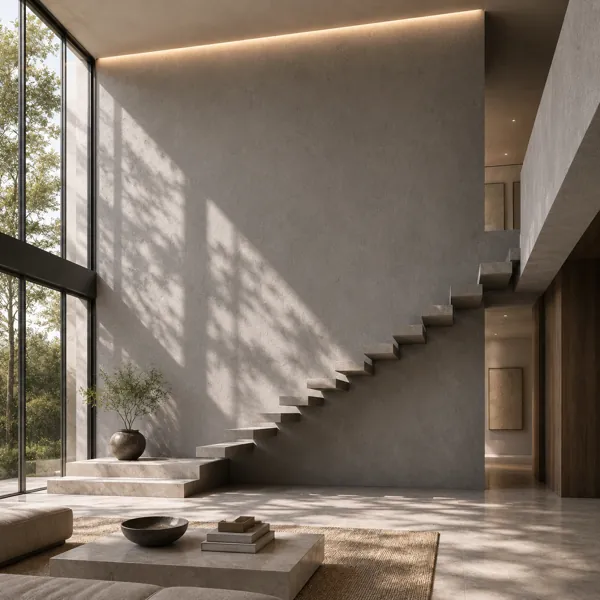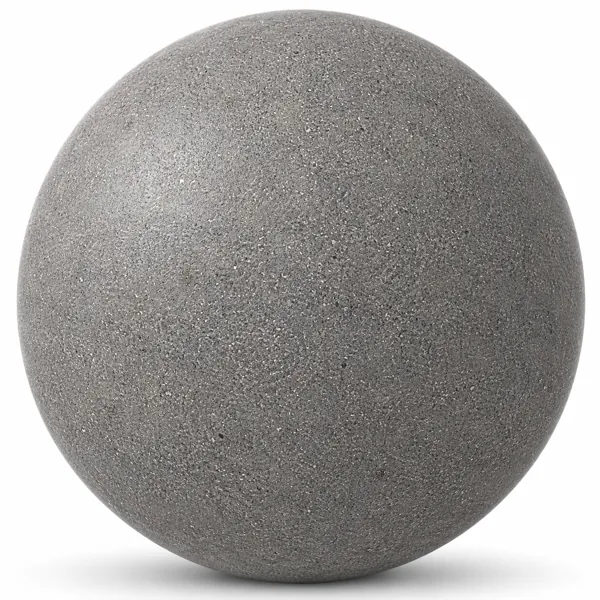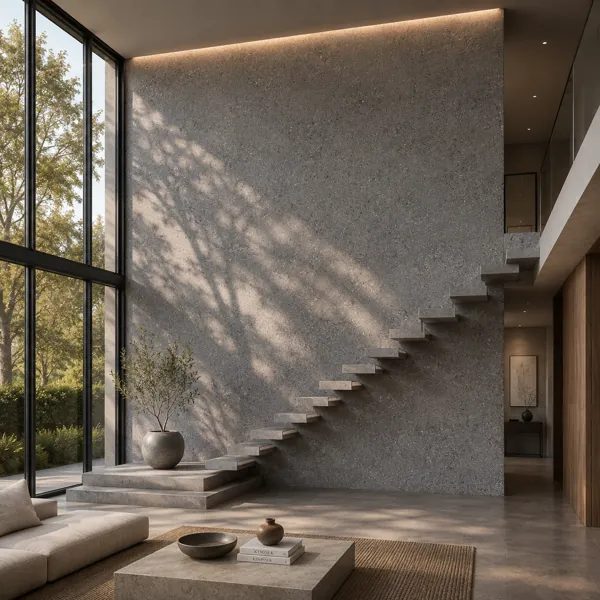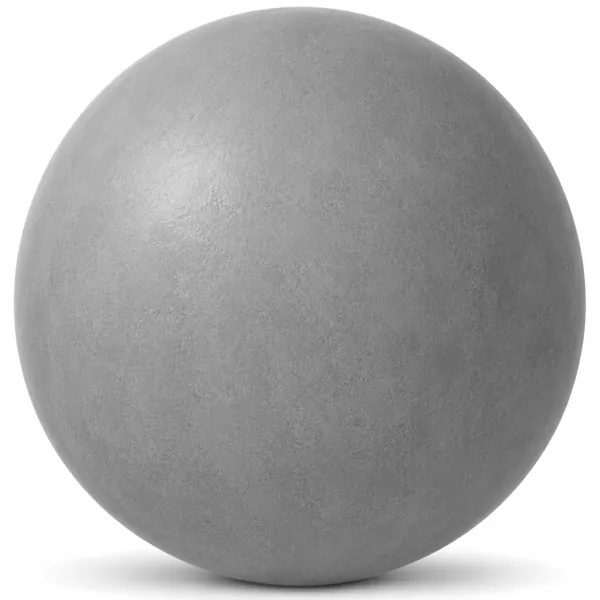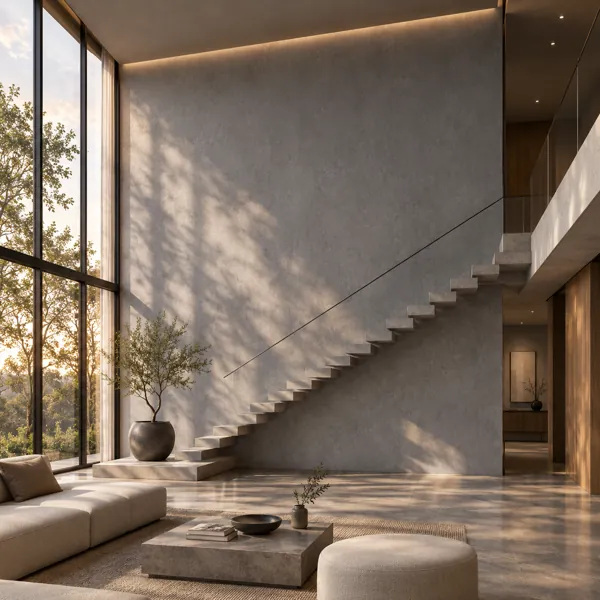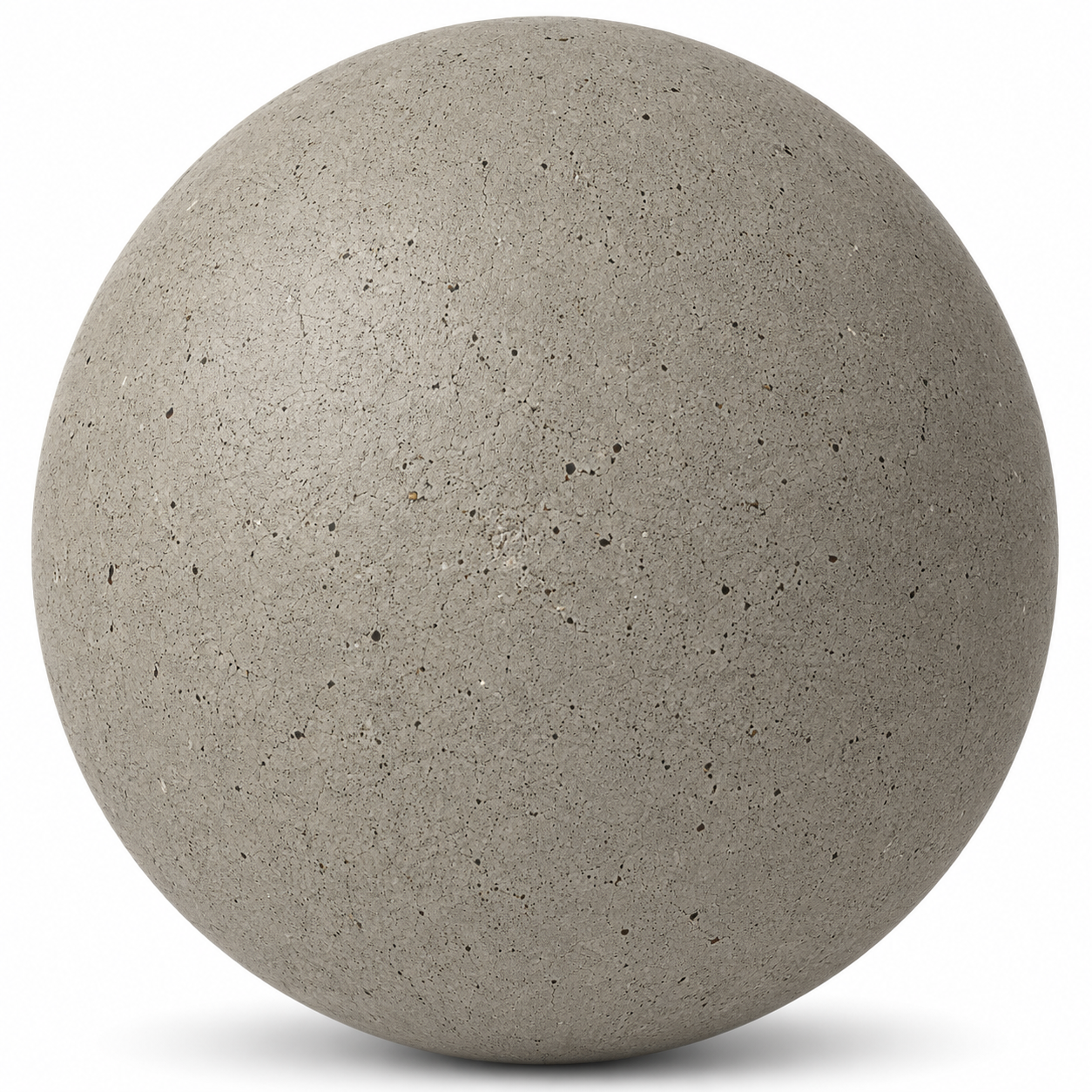
Warm Greige Fine Hairline Cracked Concrete Texture
Concrete No. 00022
FREE
Specifications
- Brand
- Laruus
- Style
- Modern
- Material
- Concrete
- Suitable spaces
- Living Room, Bedroom, Office, Cafe, Commercial, Kitchen, Garden, Outdoor, Entrance, Balcony
- Color
- BeigeGrayBrown
- File types
- Albedo MapAlpha MapAO MapBump MapDiffuse Color MapEdge MapEmission MapHeight MapMetallic MapNormal MapPacked Texture MapRoughness Map
Warm Greige Fine Hairline Cracked Concrete Texture - High Resolution Seamless PBR Textures
Description
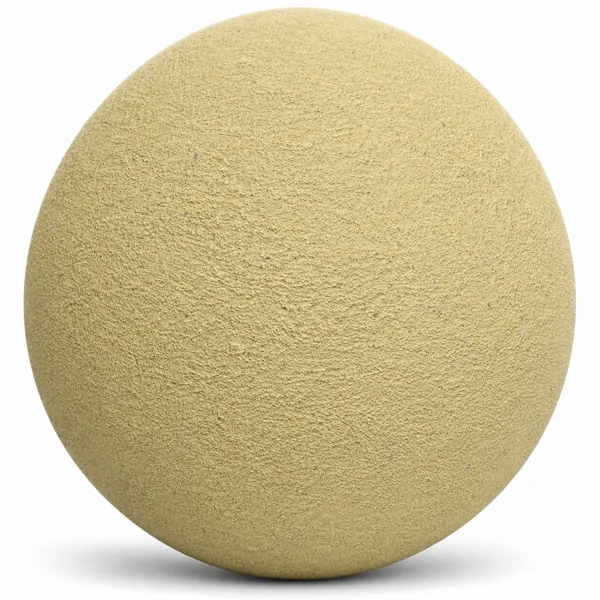
Warm Greige Fine Hairline Cracked Concrete Texture presents a muted beige-grey concrete surface distinguished by a dense network of delicate hairline cracks, scattered dark mineral speckles, small pores, and subtle tonal irregularities. The warm greige base sits between soft beige, grey, and restrained brown tones, giving the material a warmer character than conventional cool-grey concrete. Fine dark fissures travel irregularly across the surface without forming large structural breaks, while tiny black, brown, and pale mineral inclusions create natural visual variation. The combination of understated cracking and granular detail gives the material an aged but controlled appearance suitable for architectural visualization where realistic surface character is needed without extreme deterioration.
The visible structure is defined by numerous thin interconnected cracks that form irregular polygonal patterns across many areas of the surface. These fissures remain narrow and visually delicate rather than deep or dramatically opened. Small dark particles and occasional lighter mineral fragments are distributed throughout the base, adding a fine aggregate-like appearance without exposing large stones. Local areas show subtle abrasion, pores, and slightly denser granular patches, creating additional variation at close viewing distances. The supplied image does not show major fractures, deep cavities, exposed reinforcement, pronounced panel joints, or large-scale formwork markings. Exact slab dimensions, aggregate composition, crack depth, manufacturing method, surface treatment, coating, physical porosity, and measurable roughness cannot be confirmed from the image alone and should not be assumed.
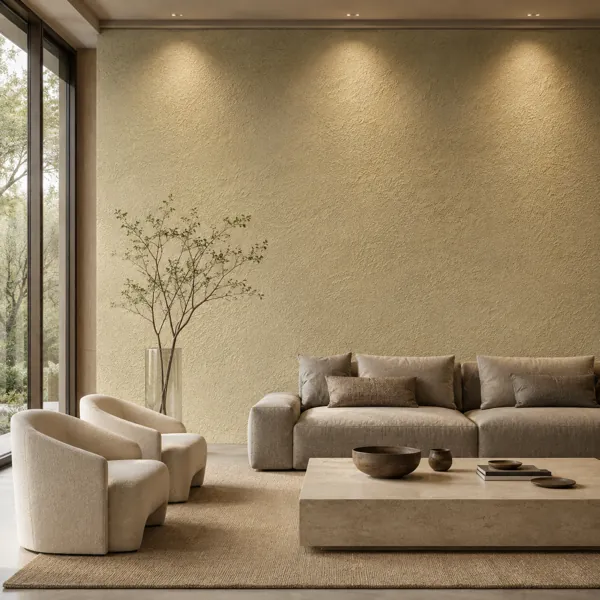
This warm greige concrete texture can visually suit Living Room, Bedroom, Office, Cafe, Commercial, Kitchen, Garden, Outdoor, Entrance, and Balcony environments. Its balanced beige-grey tone works well for feature walls, broad architectural planes, flooring concepts, counters, columns, structural volumes, stair elements, reception areas, circulation spaces, and exterior surfaces. The warm mineral color can pair naturally with Wood, Stone, Metal, Glass, Ceramic, and neutral Fabric finishes. In residential interiors, it can complement natural timber, cream upholstery, muted textiles, and earthy palettes. In Office, Cafe, and Commercial settings, the fine cracking and speckled detail can add material depth to larger surfaces while remaining restrained enough for furniture, lighting, signage, artwork, and display elements to remain visually dominant.
For archviz and CGI workflows, the supplied package includes Albedo Map, Alpha Map, AO Map, Bump Map, Diffuse Color Map, Edge Map, Emission Map, Height Map, Metallic Map, Normal Map, Packed Texture Map, and Roughness Map. These maps provide multiple channels for building a detailed PBR material in 3ds Max and other compatible 3D applications. Map connections, channel interpretation, intensity values, and Shader settings should be configured according to the selected Renderer and material workflow. Accurate UV Mapping and believable texture scale are particularly important because the recognizable character depends on fine cracks, micro-speckles, and small pores. Incorrect scaling could make the fissures appear unnaturally wide or cause repeated crack patterns to become noticeable across large surfaces.
Within interior design compositions, the warm greige base provides a softer and more natural alternative to cold industrial concrete. From wider camera distances, the surface reads primarily as a calm warm-grey architectural plane with lightly mottled tonal variation. At medium and close distances, the network of fine cracks, scattered dark particles, tiny mineral inclusions, and subtle surface irregularities becomes much more visible. This layered response makes the texture useful for both broad architectural views and detailed close-ups of walls, floors, counters, built-in elements, and structural features. Soft directional daylight or grazing artificial illumination can help reveal the crack network and granular variations without making the surface excessively dramatic.
During rendering, Bump Map, Normal Map, Height Map, and Roughness Map should be balanced according to camera distance, lighting direction, and the intended concrete response. Excessive bump or displacement may make the fine cracks appear deeper than the reference supports, so relief values should remain controlled. The image does not reliably establish whether the physical surface is polished, honed, sealed, matte, or untreated, and exact gloss or reflectivity values should not be invented. With realistic texture scaling and restrained PBR settings, this warm greige fine hairline cracked concrete material can provide a versatile architectural surface for residential, commercial, exterior, and CGI visualization scenes.
Frequently asked questions
Is this texture free?
Yes. You can download it with a free Laruus account. Free textures are limited to 5 downloads per day.
Which software can I use this texture in?
The maps are standard image files, so they work in any renderer with PBR materials, such as Corona or V-Ray in 3ds Max, Blender, SketchUp with V-Ray or Enscape, and Unreal Engine.
What do I get when I download it?
A 143 MB download. It was added to Laruus on August 24, 2026.
Which spaces is it suitable for?
It suits Living Room, Bedroom, Office, Cafe, Commercial, Kitchen, Garden, Outdoor, Entrance, and Balcony projects. Style: Modern.