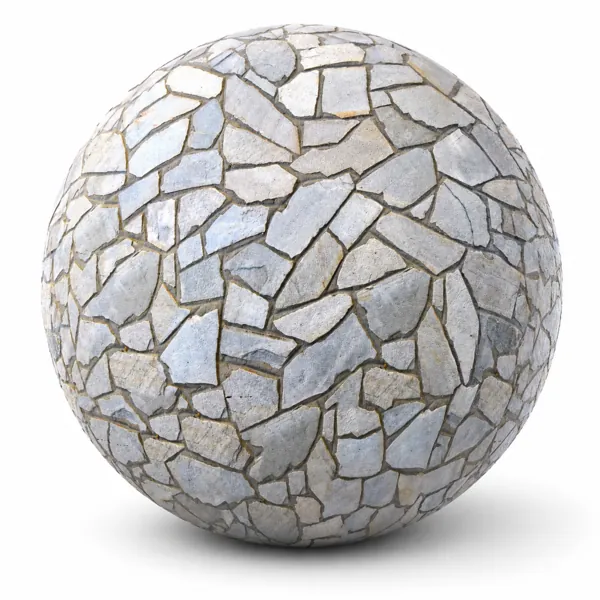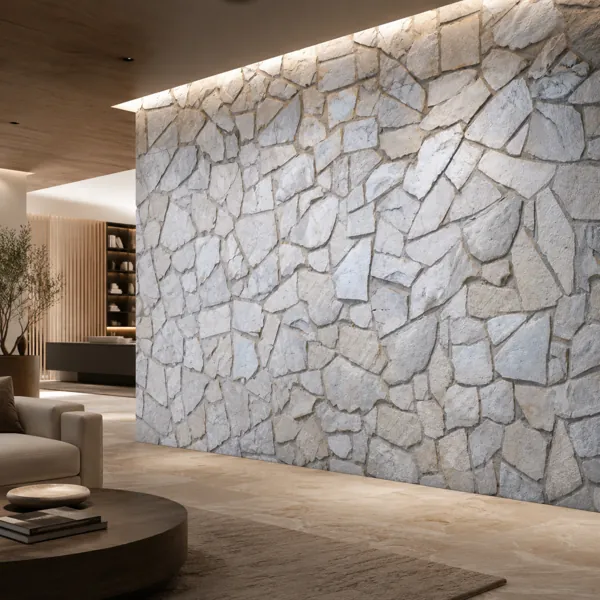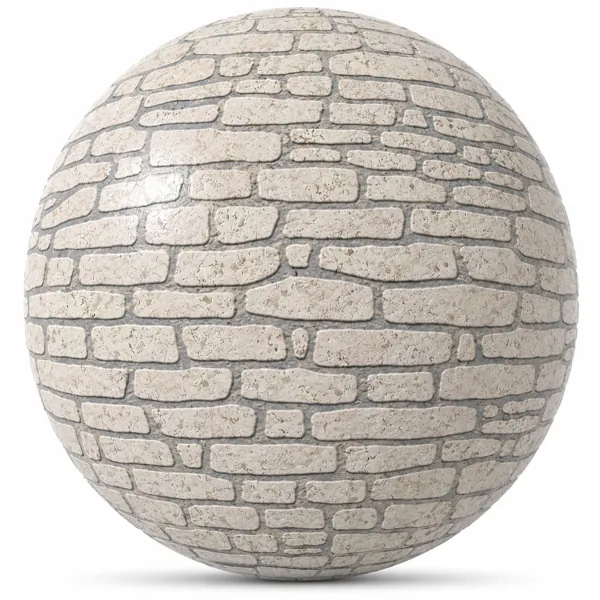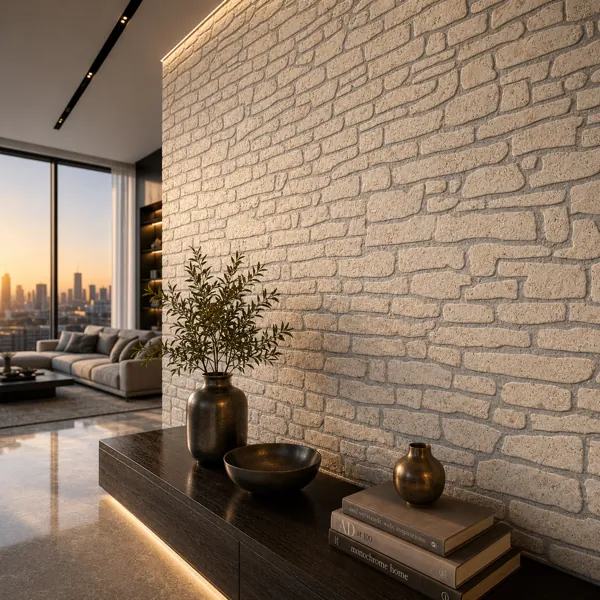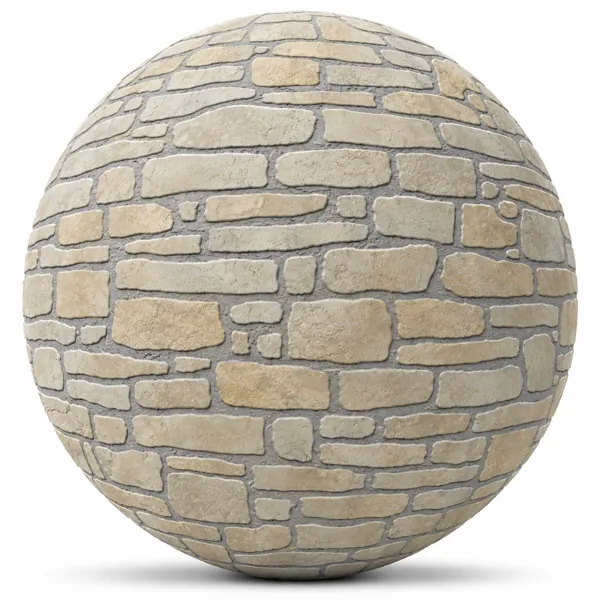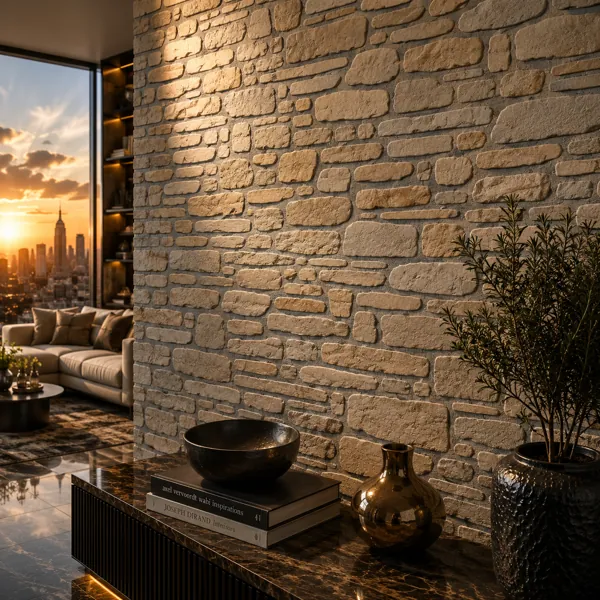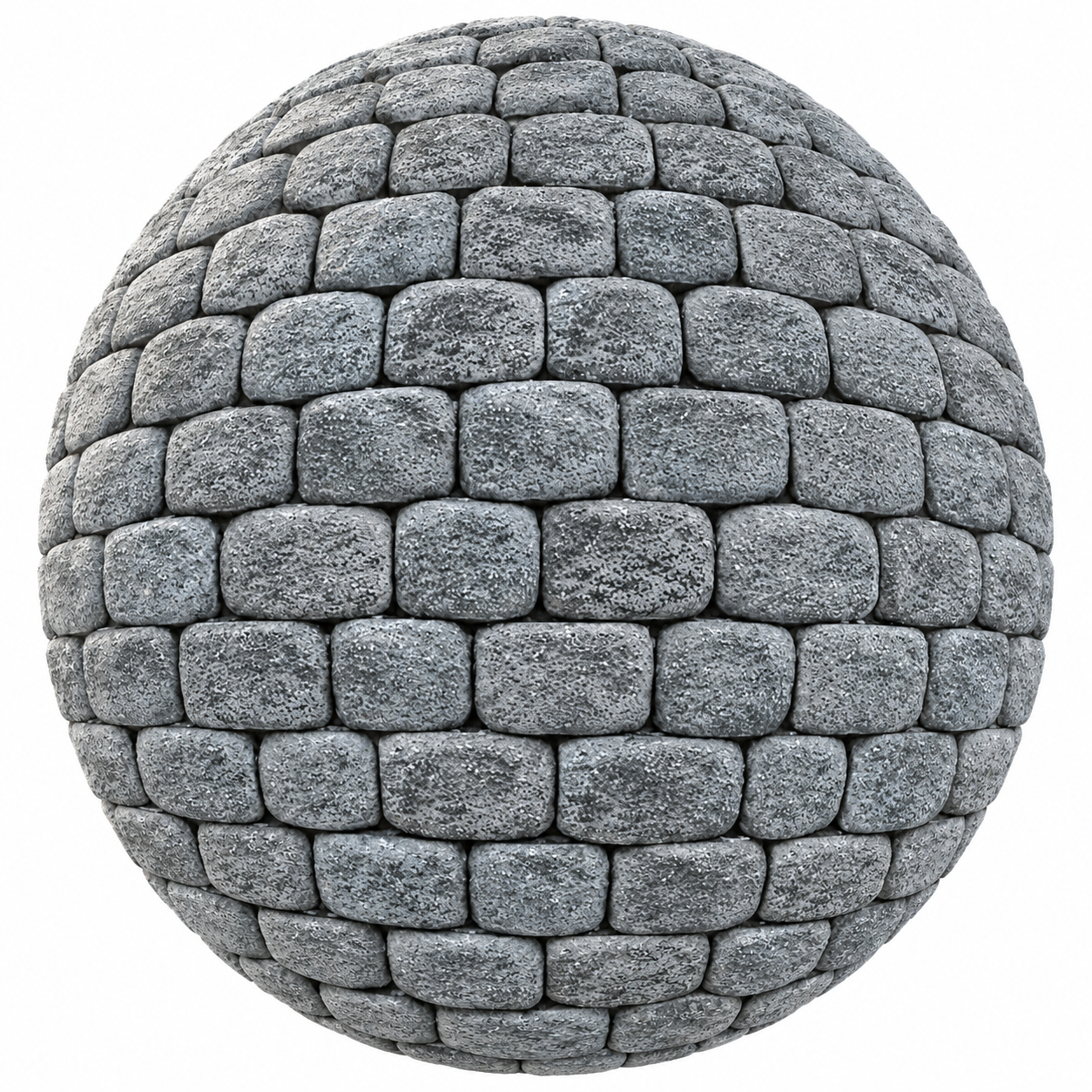
Cool Blue Gray Rounded Rough Stone Block Wall Texture
Stone No. 00093
FREE
Specifications
- Brand
- Laruus
- Style
- Modern
- Material
- Stone
- Suitable spaces
- Living Room, Bedroom, Office, Cafe, Commercial, Garden, Outdoor, Entrance, Balcony
- Color
- GrayBlueBlack
- File types
- Albedo MapAlpha MapAO MapBump MapDiffuse Color MapEdge MapEmission MapHeight MapMetallic MapNormal MapPacked Texture MapRoughness Map
Cool Blue Gray Rounded Rough Stone Block Wall Texture - High Resolution Seamless PBR Textures
Description
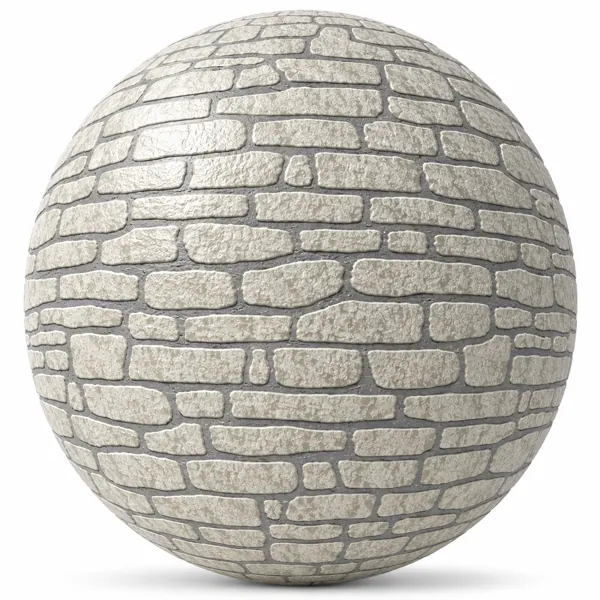
Cool Blue Gray Rounded Rough Stone Block Wall Texture features a closely arranged masonry pattern composed of compact rectangular stone blocks with softly rounded corners and a distinctly coarse surface. The material is characterized by its cool blue-gray coloration, fine dark speckling, irregular grain, and recessed joints that separate individual stones. Unlike traditional flat-faced brick textures, these blocks have gently curved edges and visibly uneven surfaces, producing a pronounced sense of depth across the wall. Subtle variations between pale silver-gray highlights, medium slate-gray areas, and darker blue-gray patches create a restrained tonal range. The overall arrangement follows horizontal courses with staggered vertical joints, giving the surface a consistent architectural rhythm while preserving small variations in block shape and texture. This combination makes the material suitable for digital architectural surfaces requiring a rough stone appearance with a relatively orderly masonry layout.
The stone pattern consists primarily of short rectangular blocks whose proportions are wider than their height. Individual pieces display rounded corners, slightly irregular outlines, and granular surfaces with numerous small pits and darker mineral-like flecks. The stones sit close together, but narrow black and charcoal-colored gaps remain visible between their edges. These recessed spaces emphasize the separation of each block and contribute to the apparent relief of the wall. Although the masonry follows repeated horizontal rows, the joints are offset rather than aligned vertically throughout the surface. Some blocks appear lighter and more evenly colored, while others contain dense dark speckling or patches of cooler gray. The surface resembles weathered, roughly finished stone masonry, but the exact geological stone type, physical dimensions, and manufacturing process cannot be established from the image alone. Its most identifiable qualities are the rounded rectangular geometry, compact block spacing, coarse granular texture, and cool monochromatic palette.
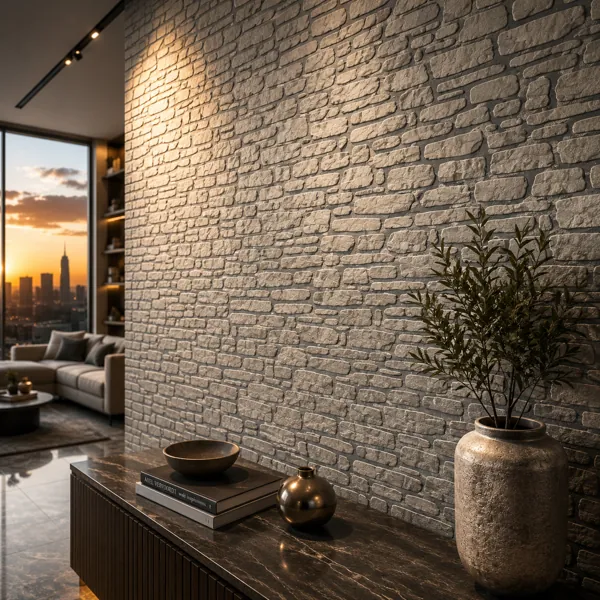
This rough stone wall texture can be incorporated into architectural visualizations of exterior facades, garden walls, courtyard enclosures, entrance features, and landscape structures. Its compact block arrangement also makes it relevant for decorative interior walls, fireplace surrounds, reception areas, and textured commercial environments. In residential projects, the material can provide visual contrast against smooth plaster, painted surfaces, or natural timber elements. In cafes, offices, and hospitality spaces, the cool gray masonry appearance can introduce a tactile architectural background without relying on strong colors. Outdoor scenes may use the texture to represent perimeter walls, low masonry structures, and decorative stone surfaces. These are visual design applications rather than verified recommendations for the structural performance or environmental durability of a physical stone product.
For architectural visualization and CGI production, the texture can be applied to 3D wall geometry, facade components, and environmental models using 3ds Max or other compatible software. The repeated courses provide a clear visual reference for establishing texture scale and UV alignment. Maintaining believable block proportions is important when mapping the material onto large architectural surfaces. Close camera views can emphasize the granular stone faces, rounded edges, and narrow dark joints, while wider views reveal the staggered masonry arrangement. Side lighting may strengthen the apparent separation between individual blocks and make the rough surface more visible. Diffuse lighting can preserve the cooler tonal variations across the stone faces. When extending the pattern across large areas, artists should inspect repetition and adjust UV placement where necessary to maintain a natural-looking composition.
Within contemporary interior and exterior design, the cool blue-gray color palette can complement concrete, brushed metal, dark timber, glass, and neutral painted finishes. The rounded block edges soften the geometry of the wall, while the dark joints maintain a defined masonry structure. This creates a balance between orderly construction and a weathered, tactile appearance. The texture may be used as a supporting background material in minimalist architecture or as a more prominent surface in rustic and industrial-inspired environments. Its compact stone pattern offers a different visual character from large-format ashlar masonry or irregular fieldstone walls. The final impression depends on the dimensions of the modeled surface, the chosen mapping scale, and the lighting conditions of the scene.
The listed texture files include Albedo, Alpha, AO, Bump, Diffuse Color, Edge, Emission, Height, Metallic, Normal, Packed Texture, and Roughness maps. In a PBR material workflow, Albedo or Diffuse Color can define the cool gray coloration and darker joint areas. Normal and Bump maps can support the appearance of fine surface grain, small pits, and rounded block edges. Height information may assist in representing apparent depth between stones when the selected shader supports it. AO can reinforce local shading within recessed joints, while Roughness can contribute to a predominantly matte stone finish. The actual contents of these maps should be verified in the supplied files before assigning specific material behavior. The presence of Metallic or Emission maps does not indicate that the visible stone is metallic or emits light. Render results depend on the material setup, UV mapping, geometry, lighting, and selected rendering engine.
Frequently asked questions
Is this texture free?
Yes. You can download it with a free Laruus account. Free textures are limited to 5 downloads per day.
Which software can I use this texture in?
The maps are standard image files, so they work in any renderer with PBR materials, such as Corona or V-Ray in 3ds Max, Blender, SketchUp with V-Ray or Enscape, and Unreal Engine.
What do I get when I download it?
A 79.3 MB download. It was added to Laruus on October 14, 2026.
Which spaces is it suitable for?
It suits Living Room, Bedroom, Office, Cafe, Commercial, Garden, Outdoor, Entrance, and Balcony projects. Style: Modern.