
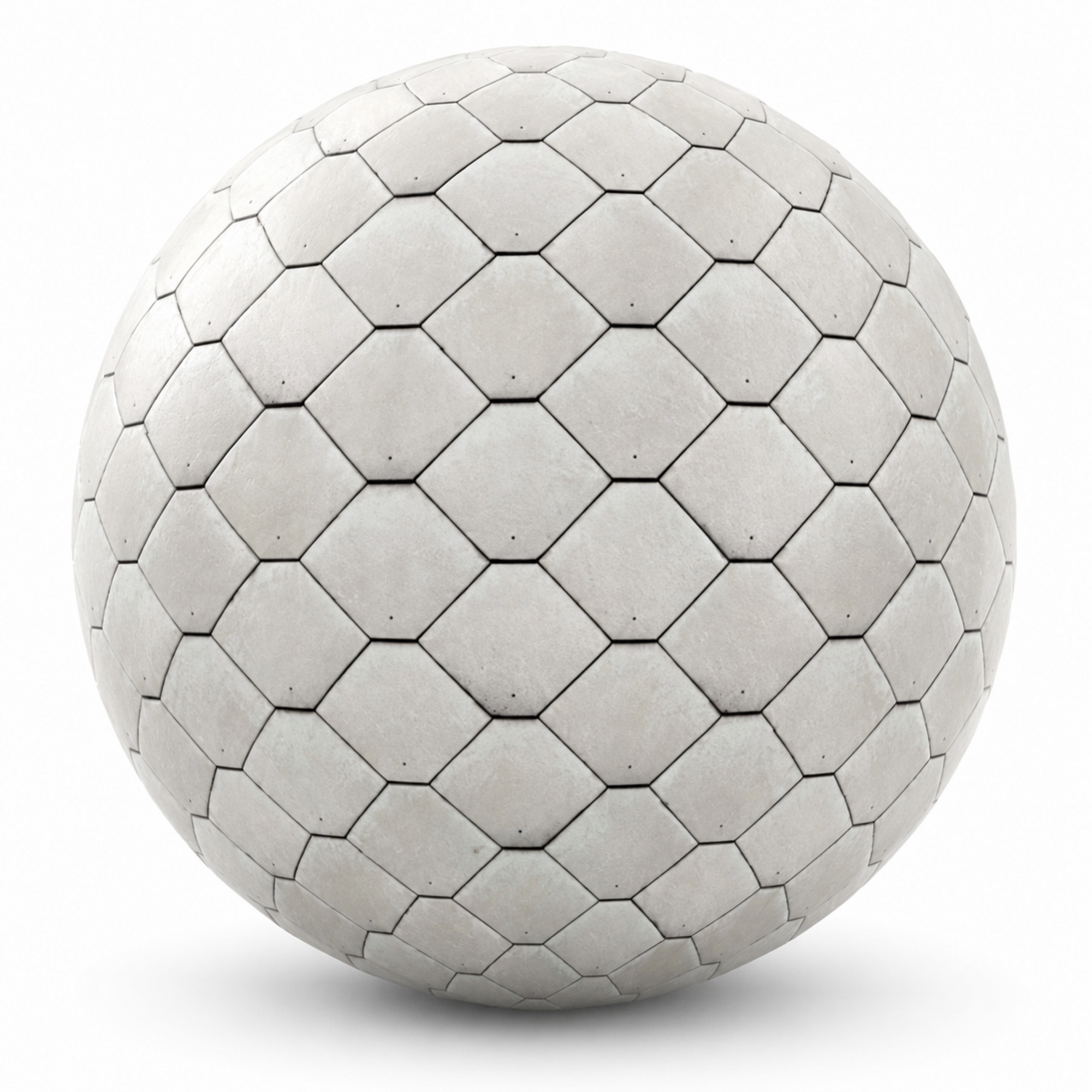
White Diamond Grid Stone Tile
Stone No. 00023
FREE
Specifications
- Brand
- Laruus
- Style
- Modern
- Material
- Stone
- Suitable spaces
- Living Room, Bedroom, Office, Cafe, Commercial, Kitchen, Entrance, Balcony
- Color
- WhiteGray
- File types
- Albedo MapAlpha MapAO MapBump MapDiffuse Color MapEdge MapEmission MapHeight MapMetallic MapNormal MapPacked Texture MapRoughness Map
Clean White Geometric Stone Pattern
Description
This white geometric stone tile surface is defined by a repeating diamond-oriented grid composed of pale stone units with clipped corners and narrow dark joints. Its most distinctive visual feature is the orderly arrangement of large rotated square forms connected by smaller polygonal intersections, creating a clean architectural rhythm without relying on conventional rectangular tile courses. The soft white to very light gray coloration gives the surface a restrained modern character, while subtle tonal variation across individual pieces prevents the pattern from appearing completely uniform. The result is a structured stone finish that can work as both a quiet background material and a recognizable geometric feature.
The visible pattern is built from consistently proportioned stone pieces arranged diagonally across the surface. Each primary unit resembles a square rotated approximately forty-five degrees, with its corners truncated to form short flat edges where adjacent pieces meet. Smaller connecting shapes appear between the larger units, reinforcing the interlocking grid. The joints are thin and dark enough to clearly outline every tile while remaining visually secondary to the pale stone faces. The stone itself appears comparatively smooth with fine surface variation, occasional tiny dark specks and subtle changes in brightness. These details add material character without disrupting the precise geometry of the layout.
This white stone tile pattern can suit living rooms, bedrooms, offices, cafes, commercial interiors, kitchens and entrance areas where a controlled geometric surface is desirable. It may also be considered for sheltered balcony applications in architectural visualization when the design calls for light neutral stonework. Potential uses include feature walls, decorative wall panels, flooring concepts, reception surfaces, fireplace surrounds, corridor walls, counters or other architectural elements where repeated stone geometry can contribute to the composition. Its white and light gray palette pairs naturally with wood, metal, glass, concrete and neutral plaster, making it adaptable to both monochromatic and warmer interior schemes.
For architectural visualization and CGI workflows, the regular geometry offers a clearly readable pattern at multiple camera distances. Close views can emphasize the slight surface variation, small specks and narrow recessed joints, while medium and wide views preserve the strong diagonal grid that defines the material. The contrast between pale stone faces and darker joints helps the individual units remain legible under both soft and directional lighting. The supplied preview displays the material across a spherical form, allowing archviz artists to assess how the diamond pattern, joint spacing and tonal consistency behave over curved geometry before applying it to architectural surfaces.
Within contemporary interior design, this geometric white stone finish can provide structure without introducing strong color. Its repeated diamond layout works particularly well alongside minimalist cabinetry, clean-lined furniture, smooth plaster and restrained architectural detailing. Compared with irregular natural stone masonry, the pattern appears more precise and controlled, making it appropriate for interiors that emphasize symmetry, repetition and calm visual order. Used selectively, it can create a distinctive feature around entrances, reception zones, fireplaces or wall panels while maintaining a light overall atmosphere.
The provided product information identifies 3ds Max as the 3D software and Corona Renderer as the rendering environment. Specific file extensions, physical dimensions, texture resolution, mapping method, displacement settings and seamless tiling properties are not confirmed and therefore should not be assumed. The visible preview supports identification of the white and light gray coloration, clipped-corner diamond geometry, narrow dark joints and subtly varied stone faces. Project-specific scale, mapping and material parameters should be verified within the supplied asset before final production rendering.
Frequently asked questions
Is this texture free?
Yes. You can download it with a free Laruus account. Free textures are limited to 5 downloads per day.
Which software can I use this texture in?
The maps are standard image files, so they work in any renderer with PBR materials, such as Corona or V-Ray in 3ds Max, Blender, SketchUp with V-Ray or Enscape, and Unreal Engine.
What do I get when I download it?
A 49.3 MB download. It was added to Laruus on June 28, 2026.
Which spaces is it suitable for?
It suits Living Room, Bedroom, Office, Cafe, Commercial, Kitchen, Entrance, and Balcony projects. Style: Modern.
You might also like


Similar products
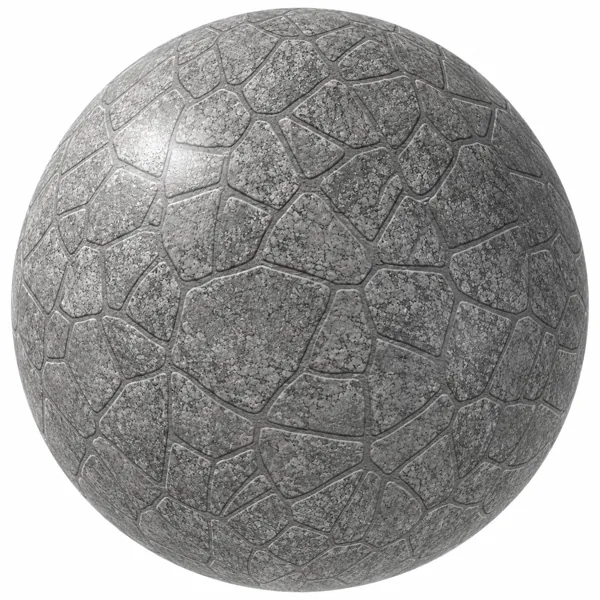
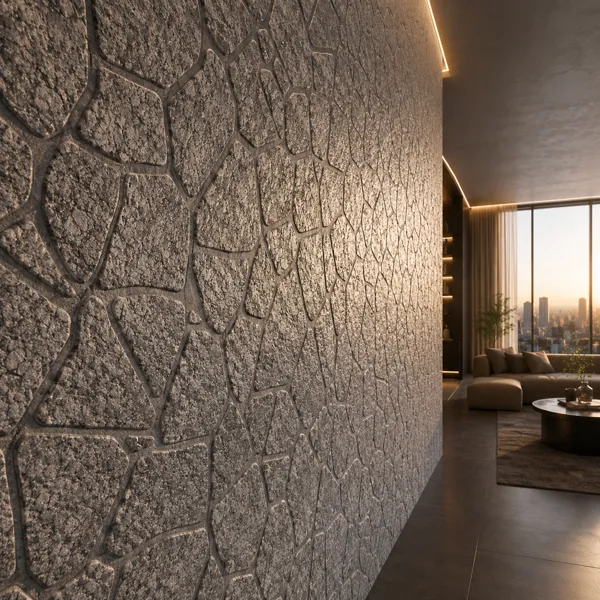
Cool Gray Pebbled Irregular Flagstone Texture
Laruus
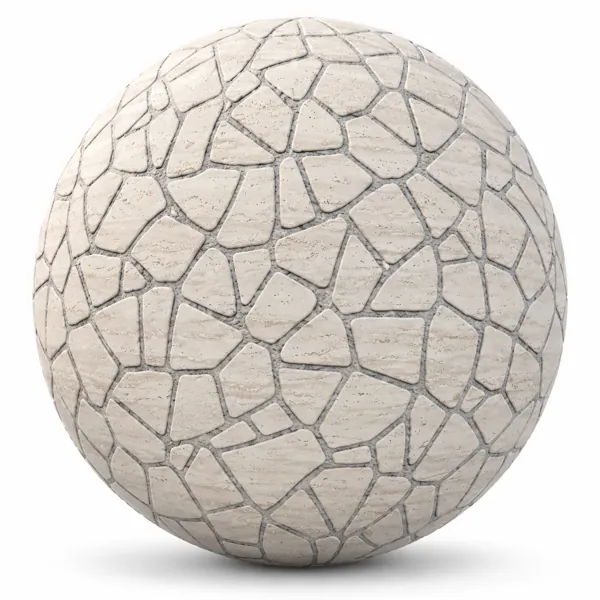
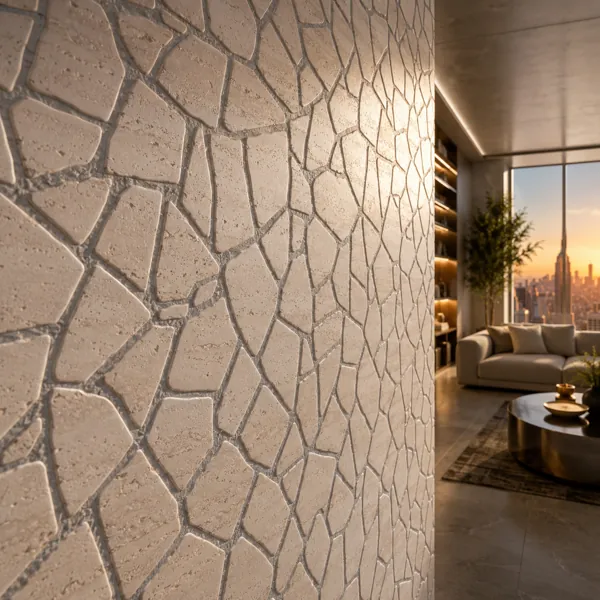
Ivory Stone Mosaic Texture – Irregular Gray Grout Texture
Laruus
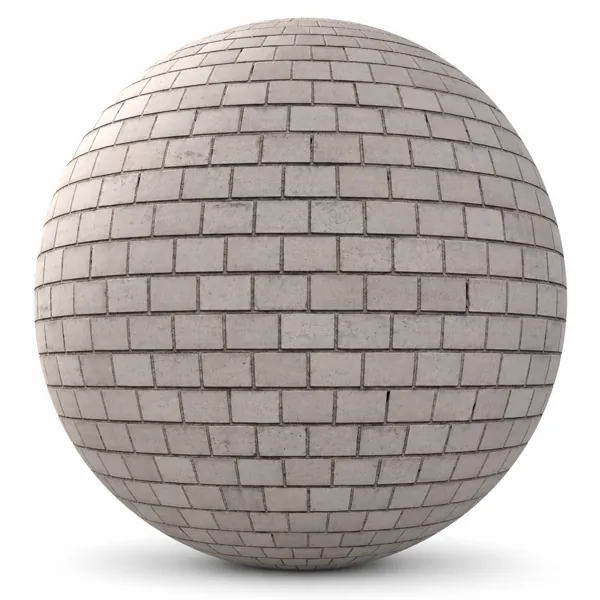
Pale Greige Stone Brick Texture – Dark Recessed Joints Texture
Laruus
Weathered Whitewashed Brown Exposed Stone Brick Texture
Laruus