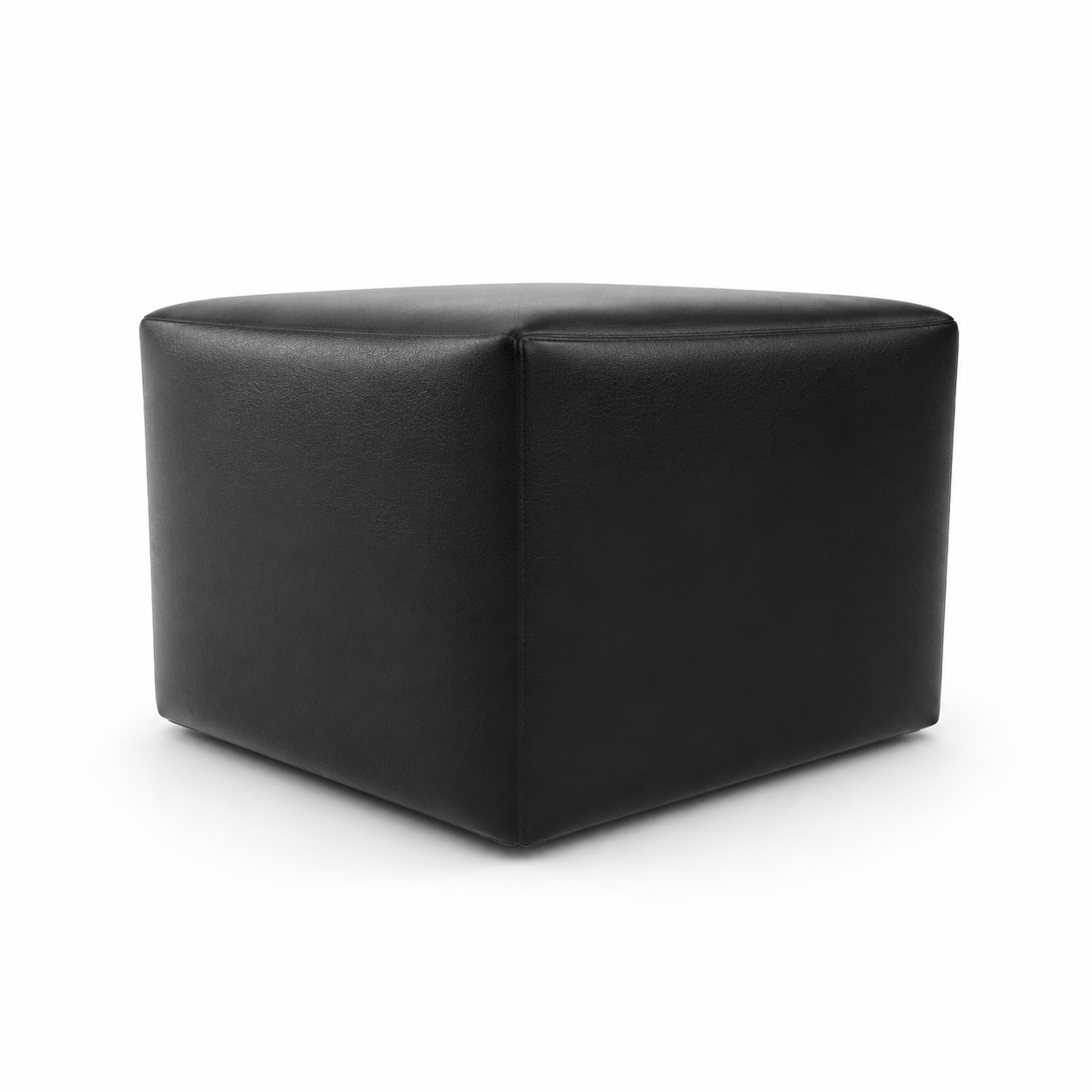
Black Cube Ottoman – Soft Rounded Edge Finish 3D Model
Other Soft Seating No. 00057
FREE
Specifications
- Brand
- Laruus
- Style
- Modern
- Material
- Fabric
- Suitable spaces
- Living Room, Bedroom, Office, Cafe, Commercial, Entrance
- Color
- Black
- File types
- 3D's MaxCorona Rendererfbxmtl3dsMapjpegobj
Clean Cube, Softened Modern Form 3D Model 3D's Max Corona Renderer
Description
The Black Cube Ottoman – Soft Rounded Edge Finish is a compact modern soft-seating piece defined by its near-cubic silhouette, deep black upholstery, subtly rounded edges, and restrained seam detailing. Its most distinctive feature is the balance between a clearly geometric block form and softened upholstered transitions along the corners and upper perimeter. Rather than appearing rigid like a hard-sided cube, the ottoman shows gentle compression and slight curvature across the top surface, giving the object a more comfortable and tactile visual character. The monochrome black finish keeps the design minimal while allowing the shape, seam lines, and surface response to become the primary visual elements. This understated appearance makes the piece suitable for contemporary residential, hospitality, office, and commercial interiors where compact auxiliary seating is required without introducing excessive visual detail.
Fabric is specified as the primary material. The visible upholstery has a smooth, finely textured appearance with subtle grain-like variation across the surface. A central vertical seam is visible on the front-facing corner, while additional seam lines define the upper edges and transitions between adjoining panels. The top is lightly cushioned and appears gently softened rather than deeply tufted, preserving the clean cube-like geometry. The lower edges also show mild rounding, allowing the form to meet the floor without a sharp architectural profile. No exposed frame, legs, feet, decorative hardware, or secondary material is visible in the supplied image. The exact Fabric composition, internal frame structure, filling type, foam density, seam construction, dimensions, weight, and load capacity cannot be reliably determined from the render and are therefore not assumed.
In an interior setting, this black cube ottoman can function as occasional seating, a compact footrest, a low accent stool, or a flexible supplementary piece in a Living Room, Bedroom, Office, Entrance, Cafe, or Commercial environment. Its simple footprint allows it to sit beside a sofa, lounge chair, console, desk, or low table without visually competing with larger furniture. The black finish works naturally with neutral interiors, pale walls, warm timber, stone surfaces, metal details, monochrome palettes, and darker contemporary schemes. Because the design is visually compact and free from projecting elements, it can also be repeated in pairs or groups for modular lounge arrangements.
For Archviz and CGI workflows, the model provides a useful study in subtle upholstery shading within a simple geometric form. Close camera views can emphasize Fabric roughness, fine surface texture, seam definition, edge softness, gentle cushion compression, and contact shadows around the base. Medium-distance views retain a clearly readable cube silhouette, making the model useful in both detailed interior shots and broader furniture compositions. Since the object is almost entirely black, controlled lighting is especially important to preserve edge definition and prevent the silhouette from merging into dark surroundings.
From an interior design perspective, the ottoman fits modern, minimalist, contemporary, and understated commercial settings. Its square proportions can reinforce clean architectural layouts, while softened corners prevent the piece from feeling overly severe. Used individually, it provides a practical low seat or footrest; arranged as multiple units, it can support flexible waiting areas, lounge zones, dressing spaces, or casual hospitality seating without creating visual clutter.
The supplied technical information associates the model with 3D's Max and Corona Renderer. No downloadable file formats are specified, so file_types remains empty. Polygon count, topology, UV layout, texture resolution, exact scale, object hierarchy, modifier setup, and detailed material parameters cannot be verified from the render alone. For production use, artists should review scene scale, Fabric mapping, seam shading, edge definition, surface roughness, contact shadows, and Corona Renderer material response after import according to the intended camera distance and lighting setup.
Frequently asked questions
Is this 3D model free?
Yes. You can download it with a free Laruus account.
Which software can I use this 3D model in?
It is prepared for 3ds Max with Corona Renderer. Via FBX and OBJ, it can be opened in Blender, Cinema 4D and Maya. Via 3DS, it can be imported into SketchUp. Corona Renderer materials need to be set up again in other programs.
What do I get when I download it?
A 9.7 MB download with 3ds Max (Corona Renderer), FBX, OBJ + MTL, and 3DS files. Texture images are included. It was added to Laruus on June 21, 2026.
Which spaces is it suitable for?
It suits Living Room, Bedroom, Office, Cafe, Commercial, and Entrance projects. Style: Modern.
Are there textures that go with it?
Yes. Laruus has textures in the same materials:
- Fabric — 142Browse Carpet Texture (92)
Can I preview it in 3D before downloading?
Yes. Use the 360 View button on the product images to rotate the model in your browser.
You might also like
Similar products
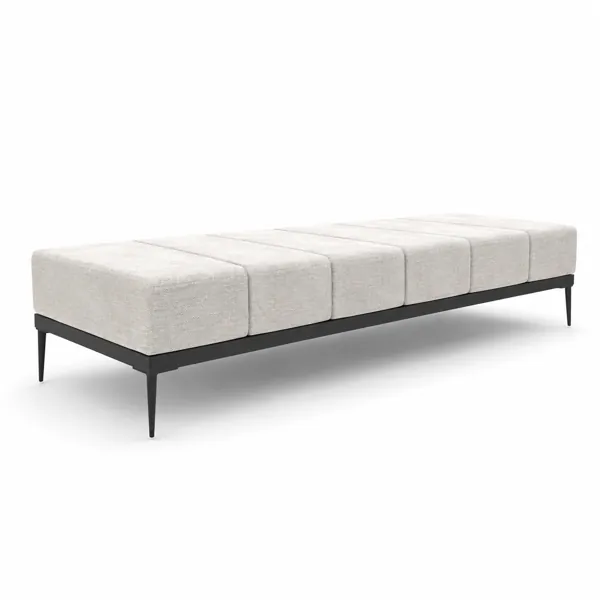
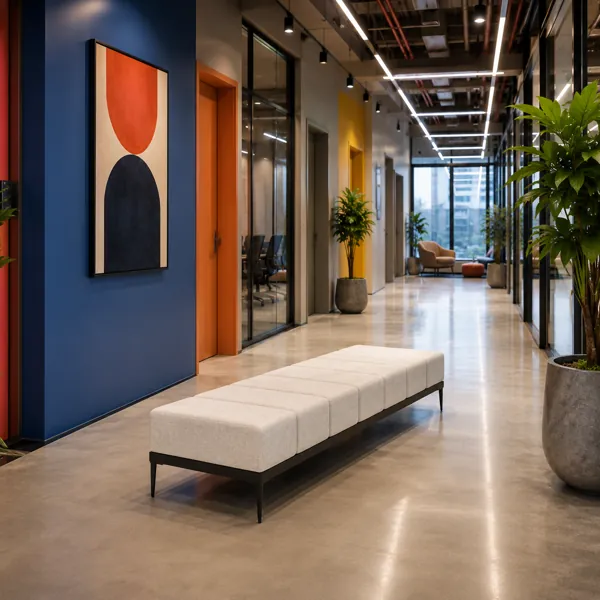
Ivory Channel Bench – Black Metal Frame 3D Model
Laruus
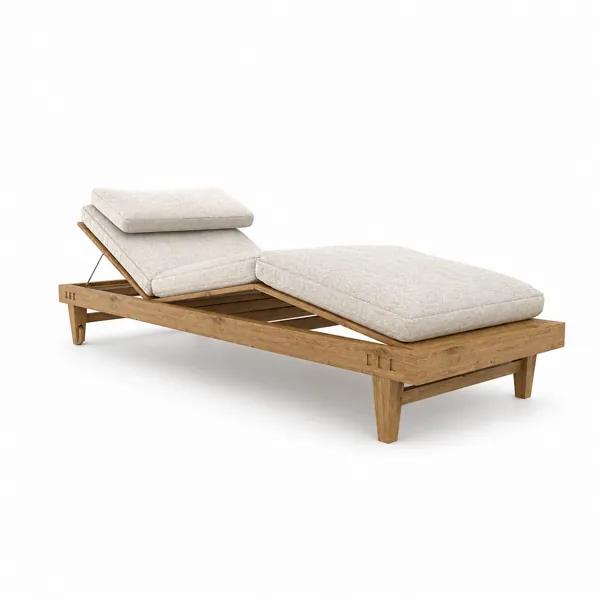
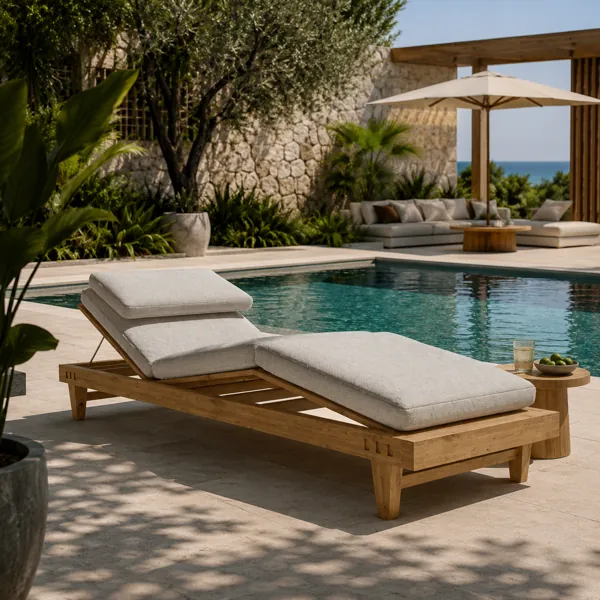
Natural Wood Chaise Lounge – Beige Cushions & Angled Back 3D Model
Laruus
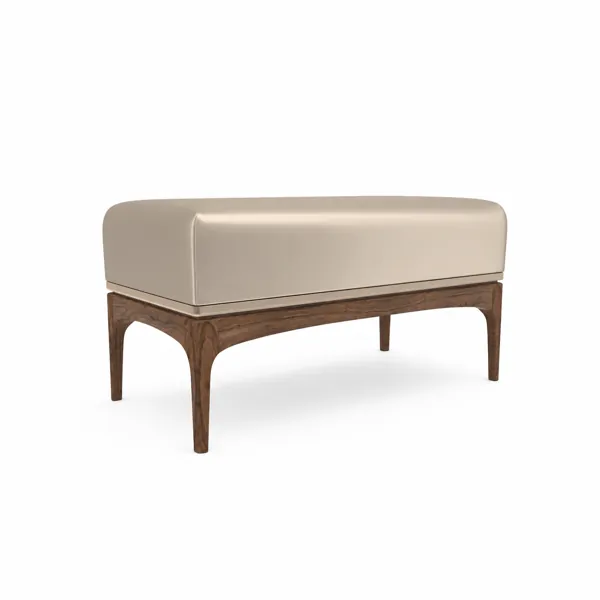
Beige Upholstered Bench – Walnut Frame with Arched Legs 3D Model
Laruus
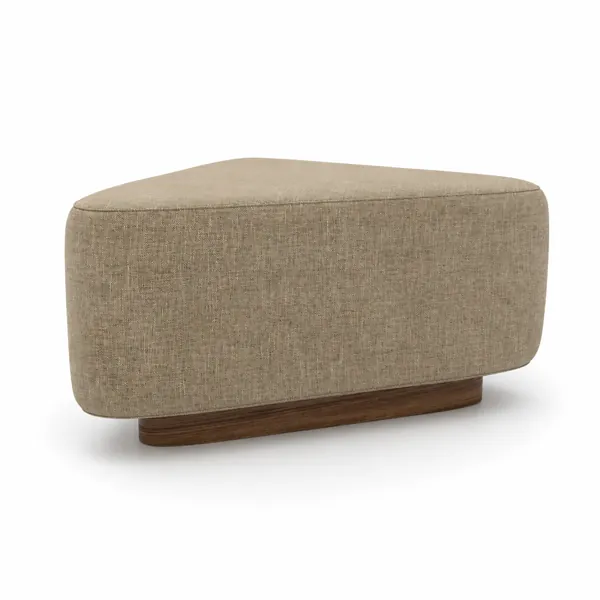
Beige Upholstered Ottoman – Dark Wood Plinth Base 3D Model
Laruus