
Parquet Patterns Explained: Herringbone, Chevron and Plank
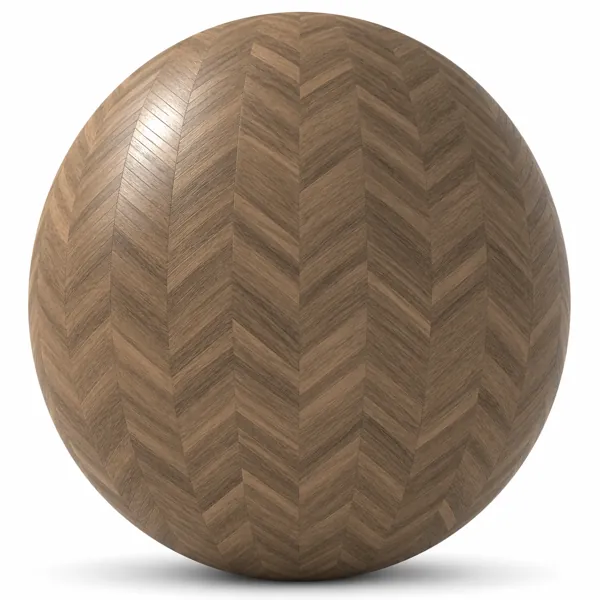
Wood flooring covers more of an interior render than almost any other surface, and the pattern you lay it in does more work than the species you choose. A mediocre oak in the right pattern at the right scale will beat a beautiful walnut laid badly.
Plank — the default that is hard to get wrong
Straight planks in a running bond, each row offset from the last, are the quietest option. They stretch a room along the direction they run, which is why most floors are laid along the longest wall or towards the main window. Keep the offset irregular. A uniform half-board offset on every row reads as a tiled texture rather than as a floor.
Herringbone — rectangles meeting at ninety degrees
Herringbone uses plain rectangular blocks laid so that the end of one meets the side of the next at a right angle, forming a broken zigzag. It is busier than plank and it draws attention, so it wants either a calm room or a deliberate contrast. Traditionally it is set at forty-five degrees to the walls, which has the useful side effect of hiding the fact that a room is rarely perfectly square.
Chevron — the one that gets mistaken for herringbone
Chevron blocks are cut at an angle on both ends so that the planks meet point to point in a continuous V. The difference is easy to miss in a thumbnail and obvious at eye level: chevron produces unbroken lines running down the room, herringbone produces a staggered zigzag. Chevron reads as more formal and more directional, and it pulls the eye along its axis in a way herringbone does not.
Scale is what actually breaks the illusion
A solid oak board is usually somewhere between 120 and 190 millimetres wide. Herringbone blocks are smaller, often 60 to 90 millimetres. If your texture is mapped so that a single block spans 400 millimetres, the render will quietly read like a doll's house, and no amount of lighting will fix it. Set the scale from the real dimension of the pattern rather than from what happens to look right in the viewport.
Repetition shows on floors before it shows anywhere else
Parquet is a high-frequency pattern spread across a large, flat, well-lit area, which is the worst possible case for a visible tile repeat. Avoid source textures with one distinctive feature — a dark knot, a stain, a chipped corner — that the eye can find and then count. Varying roughness slightly across the floor hides a repeat better than varying colour, because reflections shift as the camera moves and flat colour does not.
Laruus publishes fifty parquet sets alongside fifty wood sets, so a pattern and a species can be compared side by side before a floor is committed to.
152
Related assets from the catalogue
Ready-to-render models and seamless textures covering what this article discusses.
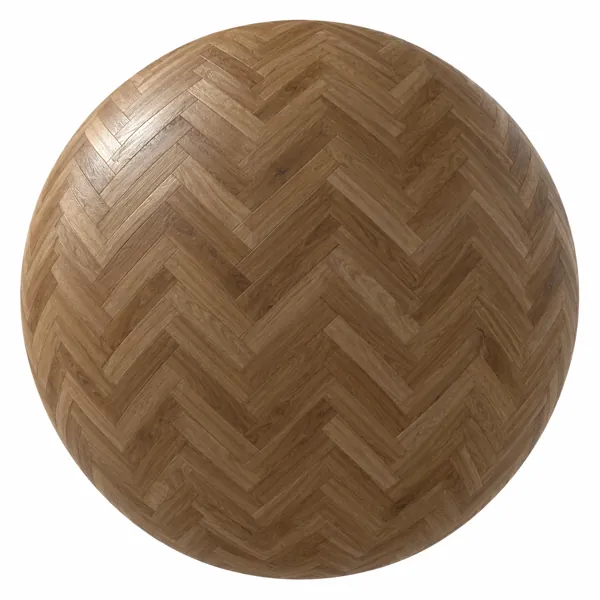
Warm Walnut Brown Herringbone Oak Parquet Texture
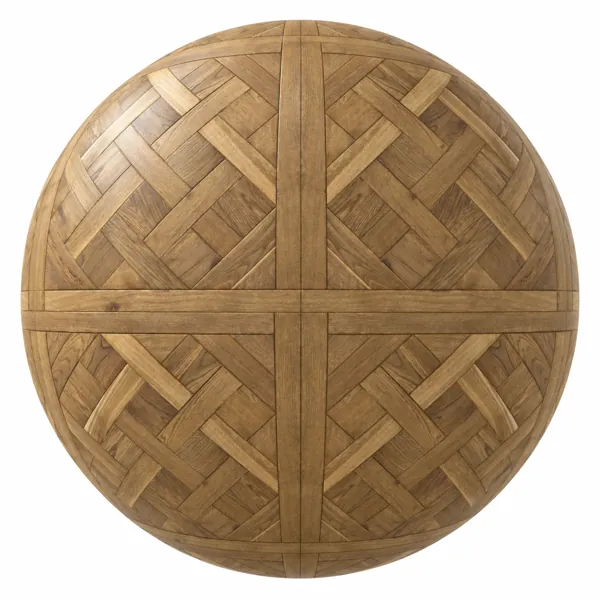
Warm Golden Basket Weave Oak Parquet Texture
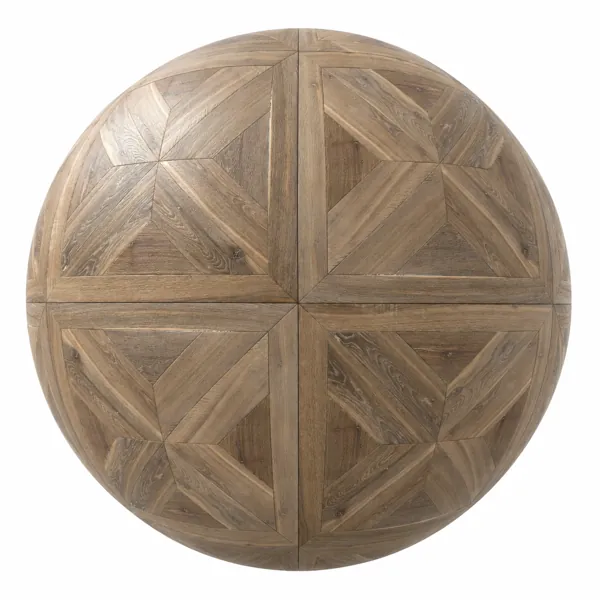
Weathered Geometric Oak Parquet Texture
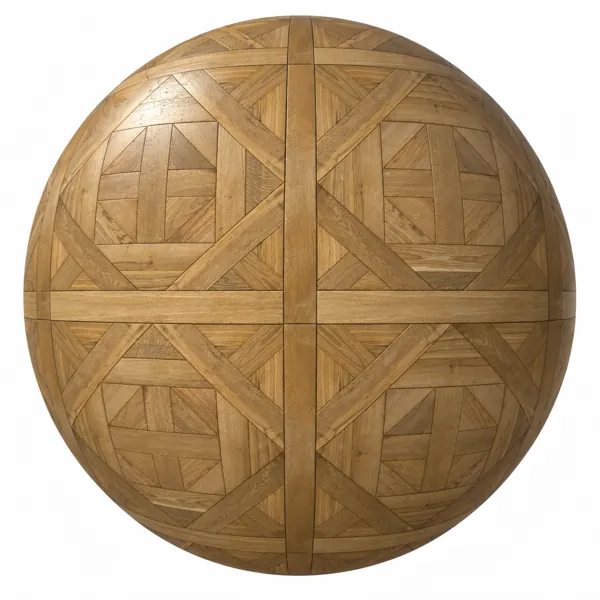
Golden Oak Geometric Panel Parquet Texture
Warm Terracotta Brown Subtle Vertical Grain Wood Texture
Warm Peach Beige Fine Grain Wood Texture
Light Taupe Fine Linear Grain Wood Texture
Light Golden Fine Linear Grain Wood Texture