Specifications
- Brand
- Laruus
- Style
- Modern
- Material
- Wood, Fabric
- Suitable spaces
- Living Room, Office, Cafe, Commercial, Kitchen
- Color
- BeigeOrange
- File types
- 3D's MaxCorona Rendererfbxmtl3dsMapjpegobj
Warm Wood Meets Terracotta 3D Model 3D's Max Corona Renderer
Description
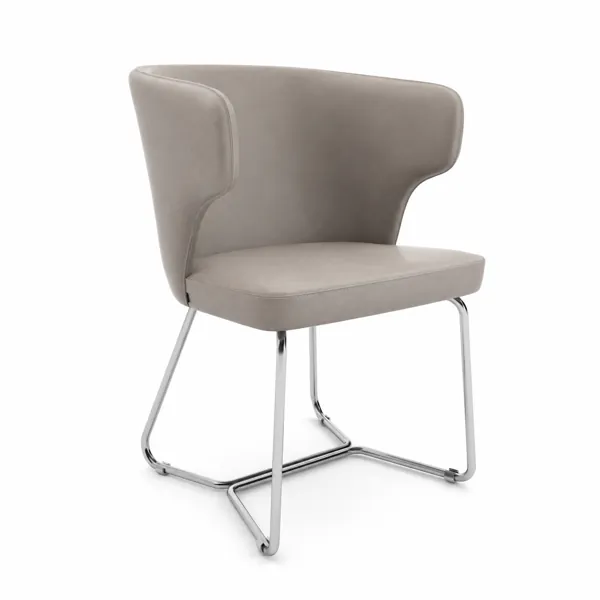
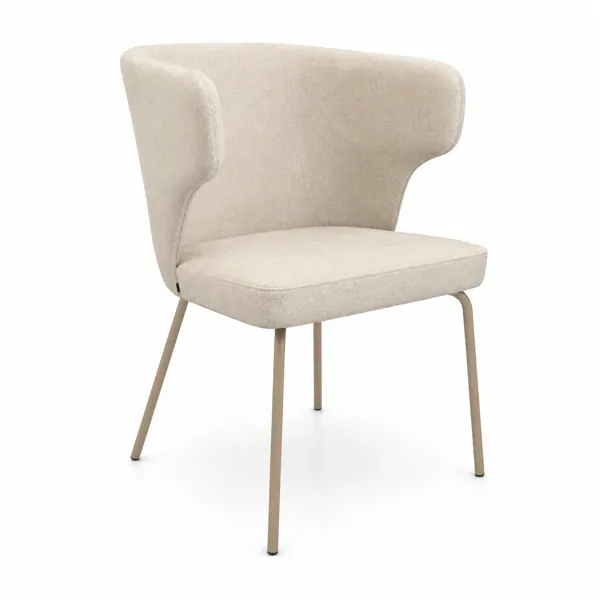
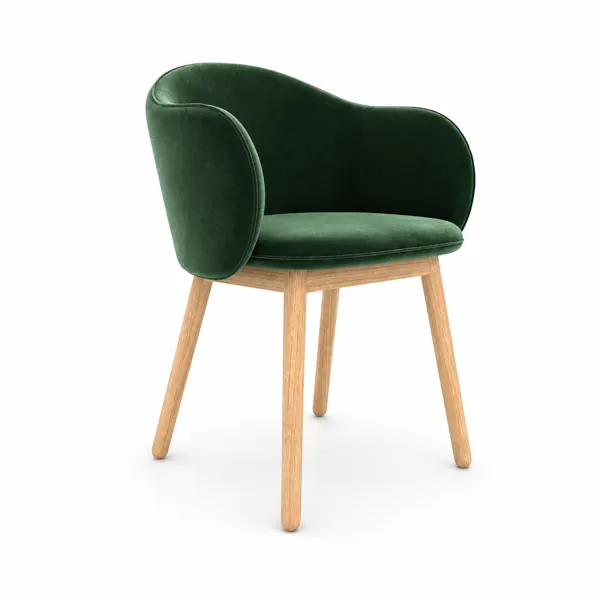
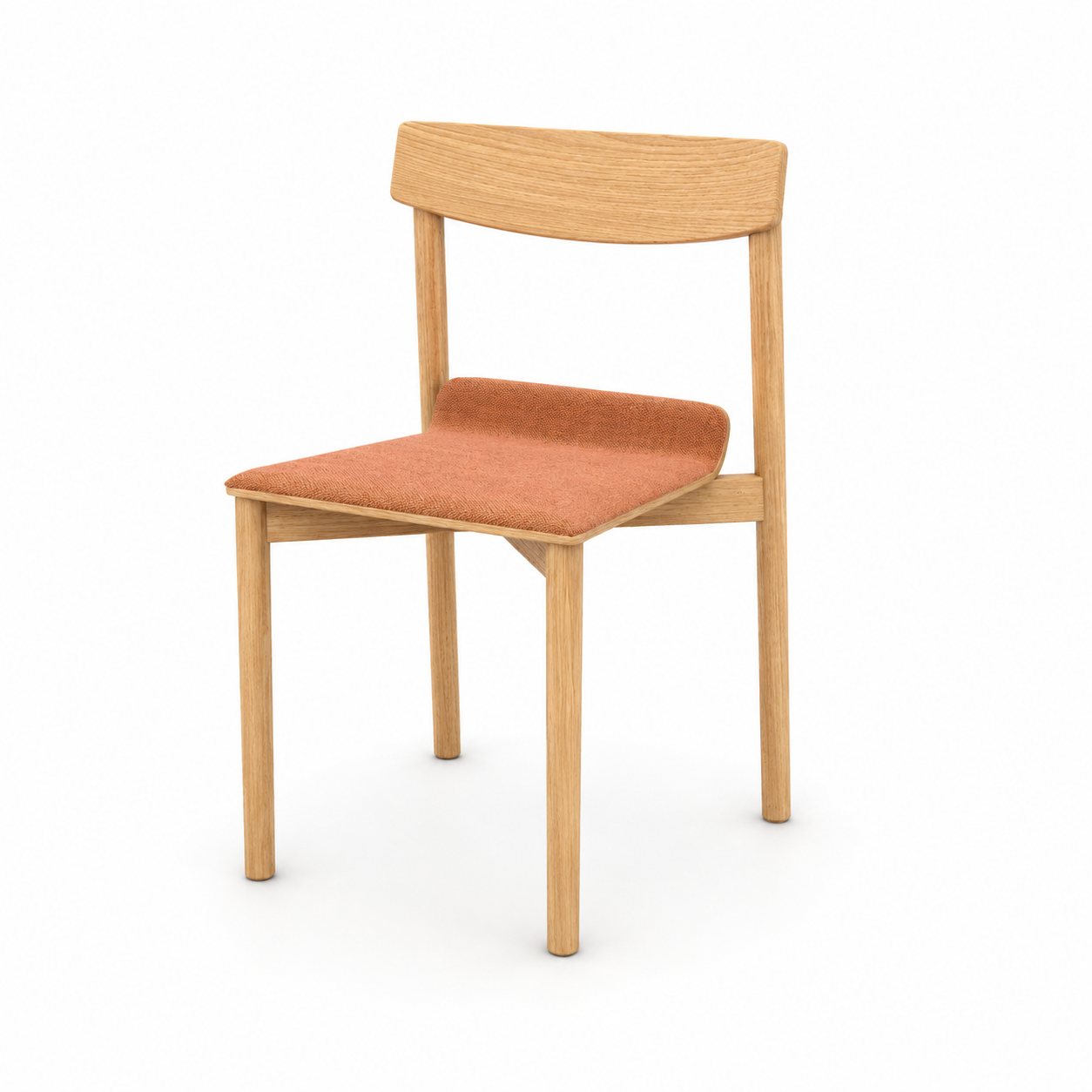
The Light Wood Chair – Terracotta Fabric Seat is a modern seating design distinguished by its warm natural wood tone, clearly visible linear grain and muted terracotta-colored upholstered seat. Its silhouette combines a broad curved upper backrest with an open central back and a softly raised fabric section at the rear of the seat. Rounded edges and slender structural elements give the chair a light, approachable profile, while the contrast between pale wood and warm textile creates a recognizable two-material identity. This combination makes the piece suitable for contemporary interiors that favor natural finishes, restrained color accents and visually uncomplicated furniture.
Wood and Fabric are the primary materials specified for this chair, and both are clearly expressed in the rendered design. The wooden frame features four slim legs, with the rear legs extending upward to support the wide upper backrest. The backrest has a gently curved lower edge and displays a horizontal grain pattern that reinforces the natural appearance of the material. The seat is broad and nearly rectangular, with softened corners and a thin wooden perimeter visible beneath the fabric surface. Toward the rear, the upholstered section curves upward to form a low supportive element. Exact dimensions, wood species, fabric composition and internal construction cannot be verified from the image and are therefore not assumed.
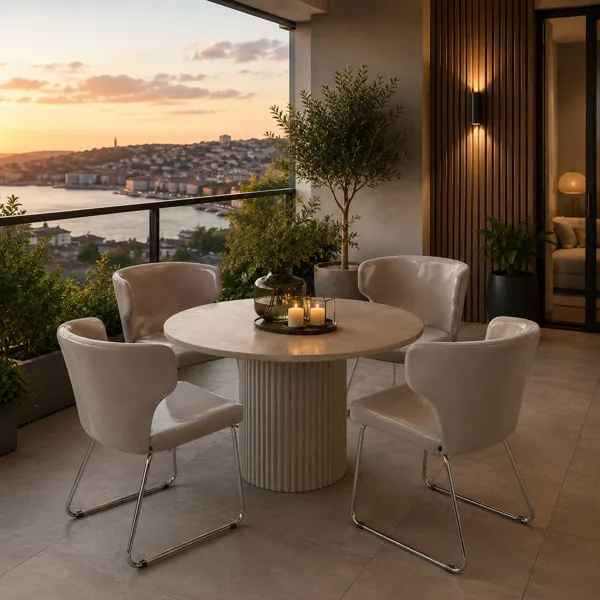
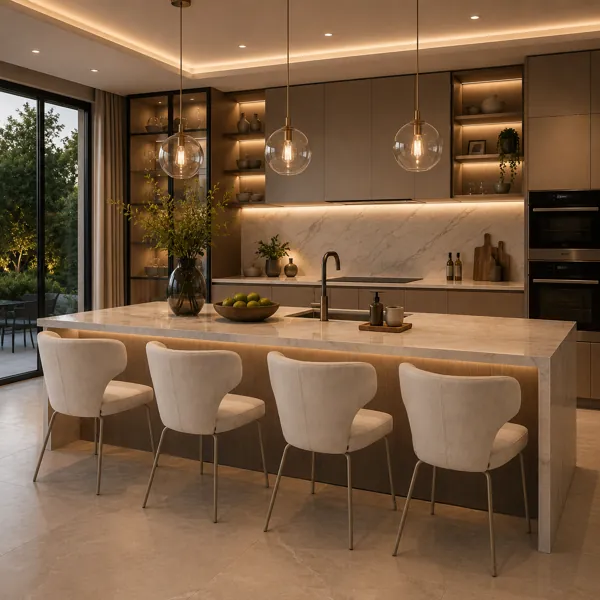
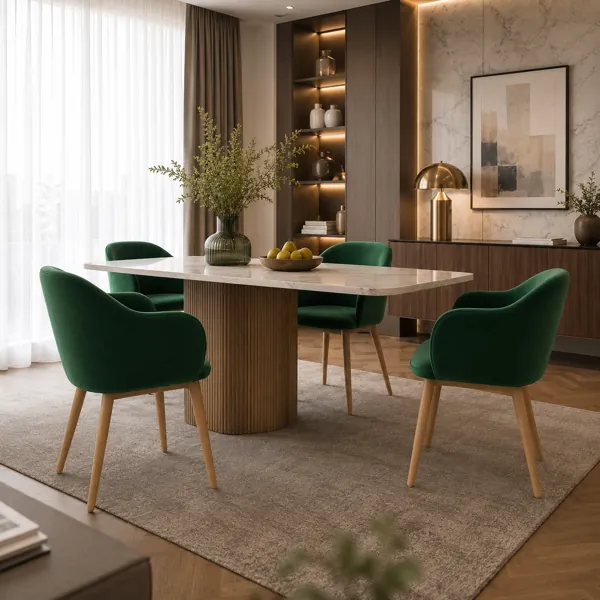
As a furniture piece, this modern wood and fabric chair can work naturally in dining rooms, kitchens, living spaces, offices, cafes and other commercial interiors. Around a dining table, the light wood frame can coordinate with pale timber, neutral surfaces or softly colored materials, while the terracotta seat introduces a warm accent without dominating the room. In a cafe or workspace, the combination of an open back and slim legs helps maintain visual openness when multiple chairs are arranged together. The chair can also function individually beside a compact table, desk or console in a contemporary residential setting.
For architectural visualization and CGI production, the chair offers a useful balance of material contrast and readable geometry. The pale wood grain can respond clearly to directional lighting, while the textured fabric seat provides a softer visual surface that contrasts with the smoother frame. The open space between the upper backrest and the seat allows background architecture and nearby furnishings to remain visible, helping reduce visual density in interior compositions. Curved transitions at the backrest and seat introduce subtle highlight changes that can add depth in both close-up furniture renders and wider archviz scenes.
Within an interior design context, the chair is particularly compatible with modern, Scandinavian-influenced, minimalist and warm contemporary environments, although no specific style beyond Modern is formally assigned. Its light wood tone pairs naturally with beige, white, stone and muted earthy palettes, while the orange-toned terracotta upholstery adds a measured color contrast. The simple frame can sit comfortably beside wood, Glass, Stone or other restrained surfaces. Repeating the chair around a table can create visual rhythm through its consistent curved backrest and warm seat color.
According to the supplied product information, the model is intended for 3ds Max and Corona Renderer workflows. Visually confirmed features include four slender wooden legs, extended rear supports, a wide curved wooden backrest, an open-back structure and a fabric-covered seat with a gently raised rear section. The visible wood grain and textile texture are relevant for evaluating material response, highlights and lighting behavior in rendered scenes. No verified information is available for polygon count, Topology, UV mapping, physical dimensions, wood species or additional file formats, so these technical details are not inferred.
Frequently asked questions
Is this 3D model free?
Yes. You can download it with a free Laruus account.
Which software can I use this 3D model in?
It is prepared for 3ds Max with Corona Renderer. Via FBX and OBJ, it can be opened in Blender, Cinema 4D and Maya. Via 3DS, it can be imported into SketchUp. Corona Renderer materials need to be set up again in other programs.
What do I get when I download it?
A 40.1 MB download with 3ds Max (Corona Renderer), FBX, OBJ + MTL, and 3DS files. Texture images are included. It was added to Laruus on June 8, 2026.
Which spaces is it suitable for?
It suits Living Room, Office, Cafe, Commercial, and Kitchen projects. Style: Modern.
Are there textures that go with it?
Yes. Laruus has textures in the same materials:
- Wood — 202Browse Wood Texture (102)
- Fabric — 142Browse Carpet Texture (92)
Can I preview it in 3D before downloading?
Yes. Use the 360 View button on the product images to rotate the model in your browser.