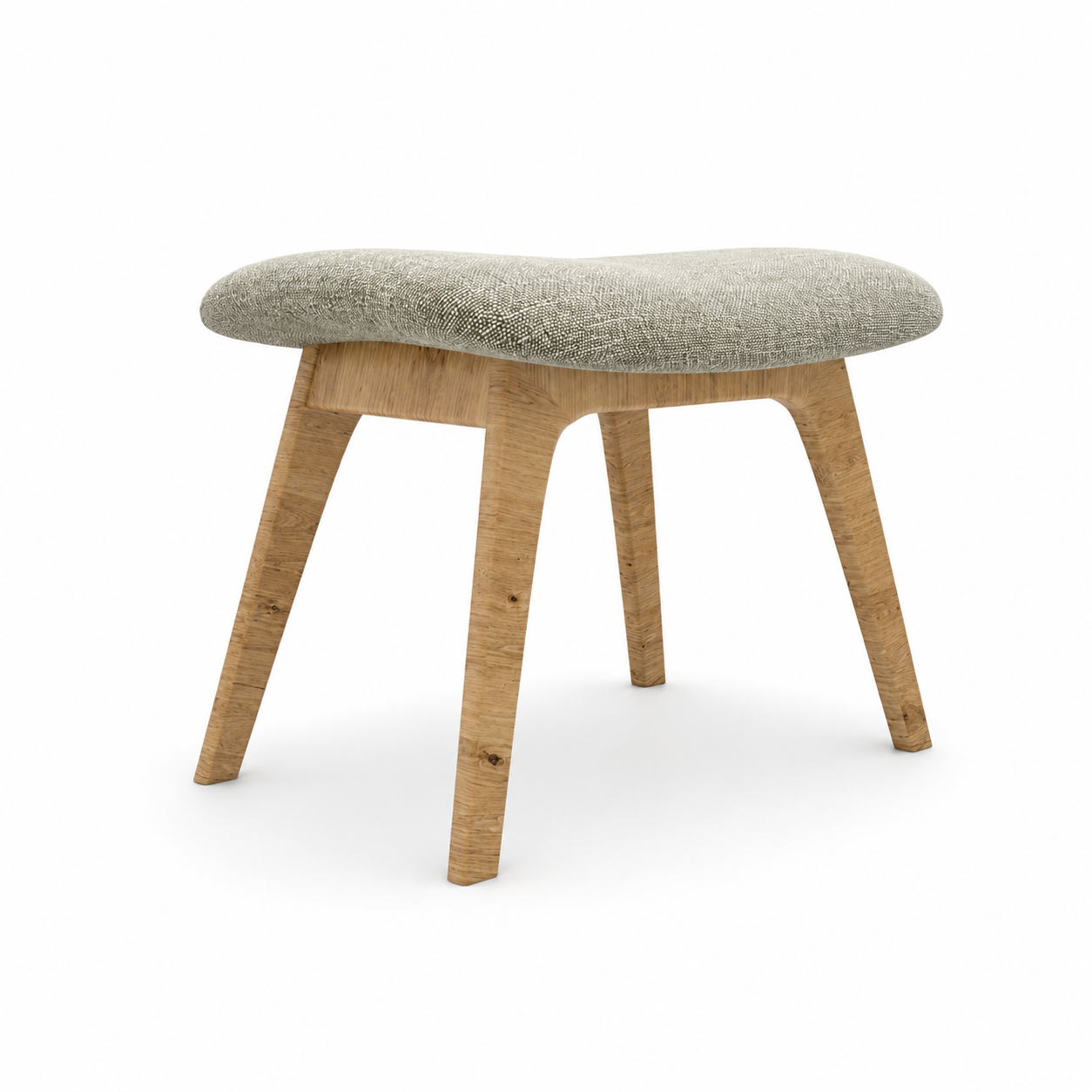
Ivory Textured Fabric Stool – Natural Wood Frame 3D Model
Other Soft Seating No. 00068
FREE
Specifications
- Brand
- Laruus
- Style
- Modern
- Material
- Fabric, Wood
- Suitable spaces
- Living Room, Bedroom, Office, Cafe, Commercial, Entrance
- Color
- WhiteBeigeBrown
- File types
- 3D's MaxCorona Rendererfbxmtl3dsMapjpegobj
Soft Texture, Natural Balance 3D Model 3D's Max Corona Renderer
Description
The Ivory Textured Fabric Stool – Natural Wood Frame is a compact modern seating piece distinguished by its softly contoured upholstered top and warm natural wood base. Its defining visual characteristic is the combination of a pale ivory-beige Fabric seat with visible woven texture and a light brown Wood structure showing natural grain variation. The seat has a gently sculpted profile with a shallow central dip and rounded outer edges, creating a softer, more ergonomic-looking silhouette than a flat rectangular stool. Beneath it, four slightly splayed legs support a simple integrated frame, producing a balanced form with a light visual footprint. The contrast between tactile upholstery and visible timber grain gives the stool a calm, contemporary identity suitable for interiors where material texture plays an important role.
Fabric and Wood are specified as the main materials. The upholstery displays a fine, irregular woven surface with small tonal variations that become more noticeable across curved areas. Its ivory-to-light-beige coloration remains neutral while still providing enough texture to read clearly in close views. The Wood frame has a warm natural finish with visible grain lines, knots, and subtle tonal changes that make the structure more visually expressive than a uniformly painted base. The legs angle slightly outward and connect to the upper support frame through broad, softened transitions. Exact wood species, Fabric fiber composition, internal cushioning, joinery method, physical dimensions, weight, and load capacity cannot be confirmed from the supplied render and should not be assumed.
In an interior setting, this upholstered stool can function as occasional seating, a compact dressing stool, a footrest, or a small accent piece. It is especially suitable for a Living Room beside an armchair or sofa, a Bedroom near a dressing table or bed, and an Entrance where a lightweight seat is useful without occupying much floor area. Its compact proportions can also work in an Office lounge, Cafe, or selected Commercial interior. The pale neutral upholstery and natural wood tone coordinate easily with white walls, beige textiles, gray finishes, stone, concrete, darker timber, and black details, making the stool adaptable to modern, minimalist, and Scandinavian-influenced spaces.
For Archviz and CGI workflows, the model offers a useful contrast between a visibly textured Fabric surface and a grain-rich Wood frame. The woven seat can contribute convincing close-range detail, while the rounded edges and subtle central depression create soft highlight transitions under interior lighting. At medium camera distances, the splayed legs and sculpted seat produce an easily readable silhouette. In closer compositions, Fabric roughness, weave scale, Wood grain direction, edge softness, contact shadows, and material separation become important visual cues. These characteristics make the stool useful for residential visualization, hospitality concepts, furniture layouts, and material studies where smaller objects help add realism and scale.
From an interior design perspective, the stool works particularly well where a visually light furniture element is preferred over bulkier upholstered seating. The open space between the four legs keeps the lower portion uncluttered, while the cushioned top adds softness and comfort to the composition. Rounded seat edges counterbalance straight architectural lines, cabinetry, and rectilinear furniture, while the natural wood grain introduces warmth without decorative ornament. The stool can be placed individually as a functional accent or repeated in larger layouts where a consistent furniture language is required.
The supplied technical information associates the model with 3D's Max and Corona Renderer. No downloadable file formats are specified, so file_types remains empty. Polygon count, topology, UV layout, texture resolution, exact scale, object hierarchy, modifier setup, and detailed material parameters cannot be verified from the render alone. For Archviz production, users should review scene scale, Fabric mapping, weave scale, Wood grain orientation, cushion shading, contact shadows, and Corona Renderer material response after import according to the intended lighting setup and camera distance.
Frequently asked questions
Is this 3D model free?
Yes. You can download it with a free Laruus account.
Which software can I use this 3D model in?
It is prepared for 3ds Max with Corona Renderer. Via FBX and OBJ, it can be opened in Blender, Cinema 4D and Maya. Via 3DS, it can be imported into SketchUp. Corona Renderer materials need to be set up again in other programs.
What do I get when I download it?
A 29.8 MB download with 3ds Max (Corona Renderer), FBX, OBJ + MTL, and 3DS files. Texture images are included. It was added to Laruus on June 21, 2026.
Which spaces is it suitable for?
It suits Living Room, Bedroom, Office, Cafe, Commercial, and Entrance projects. Style: Modern.
Are there textures that go with it?
Yes. Laruus has textures in the same materials:
- Fabric — 142Browse Carpet Texture (92)
- Wood — 202Browse Wood Texture (102)
Can I preview it in 3D before downloading?
Yes. Use the 360 View button on the product images to rotate the model in your browser.
You might also like

Similar products
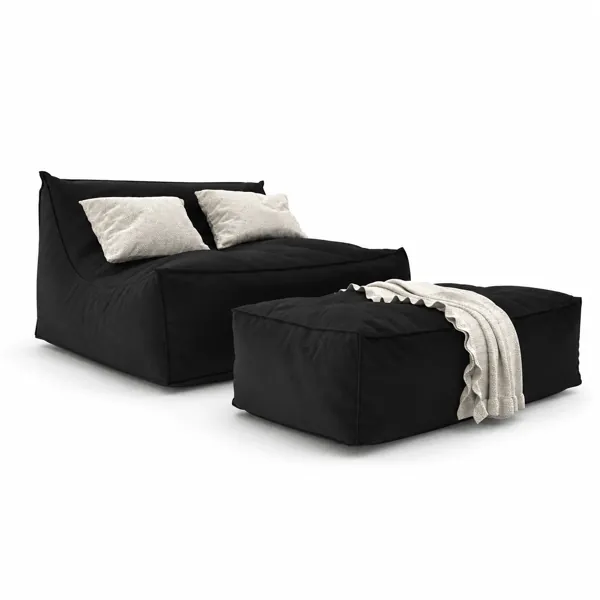
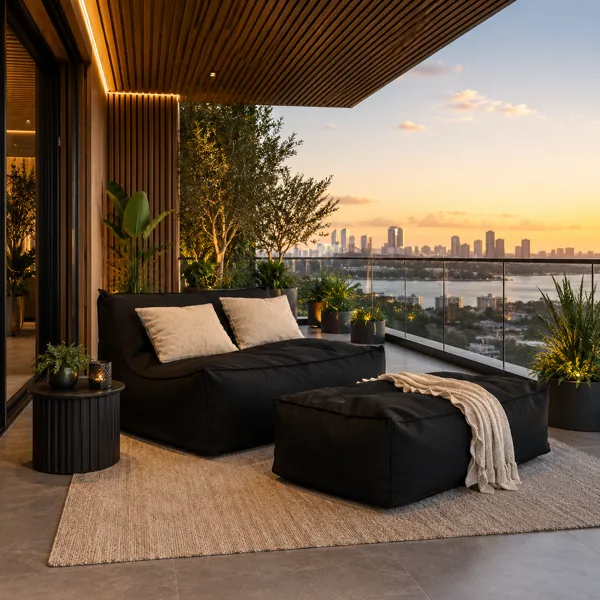
Black Floor Lounge Daybed – Matching Oversized Ottoman 3D Model
Laruus
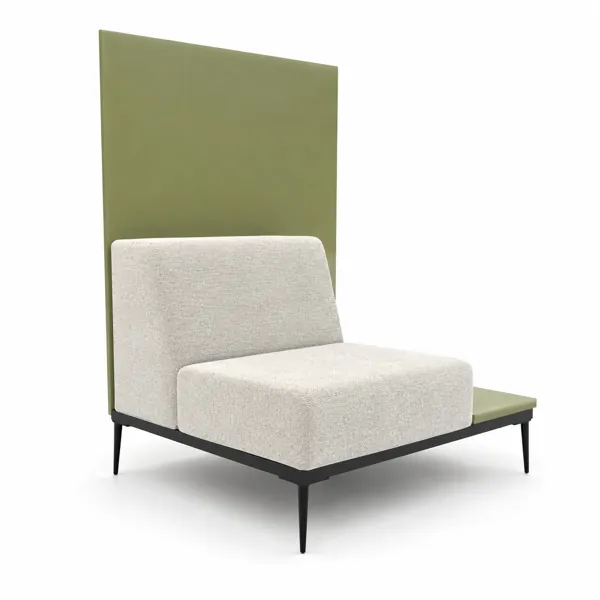
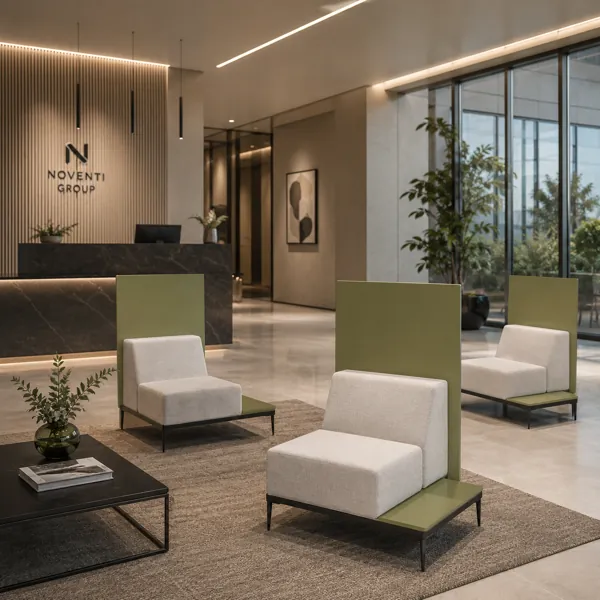
Ivory Lounge Chair – Tall Olive Privacy Panel 3D Model
Laruus
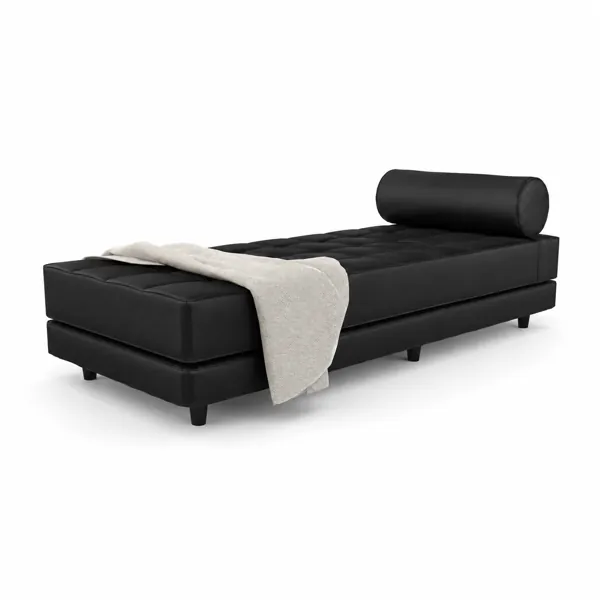
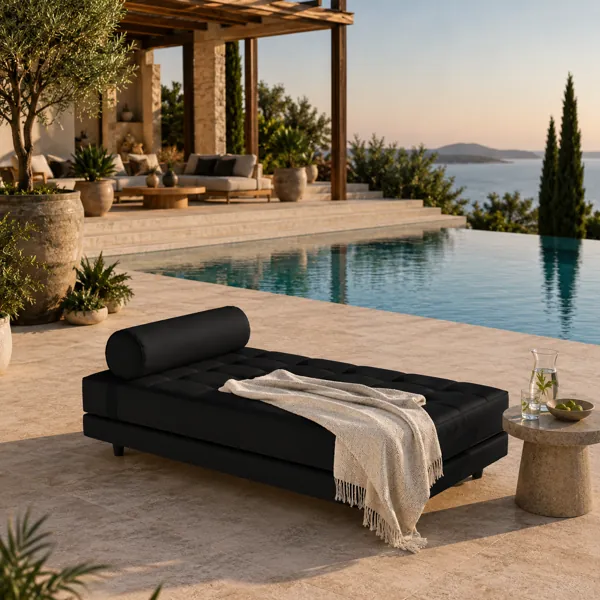
Black Tufted Daybed – Cylindrical Bolster with Beige Throw 3D Model
Laruus
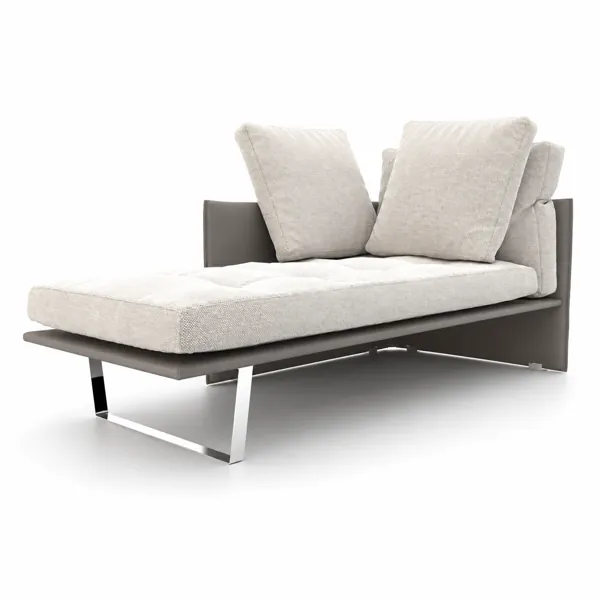
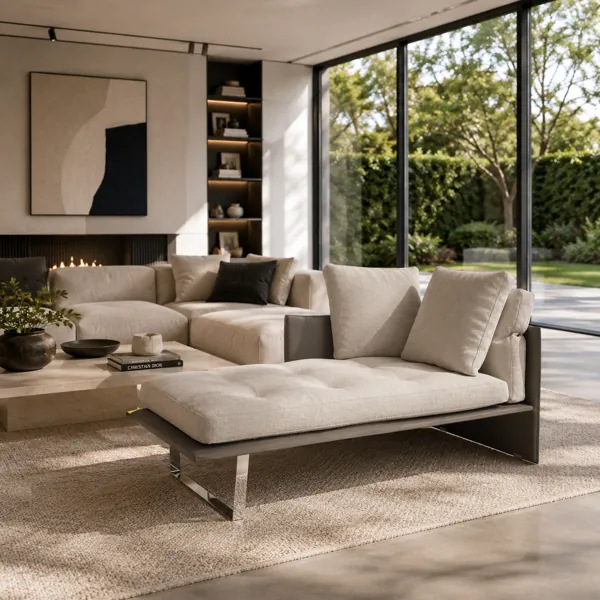
Modern Daybed Sofa – Ivory Textured Cushions & Taupe Leather Frame 3D Model
Laruus