
Repeating Chairs Without Making the Room Look Cloned
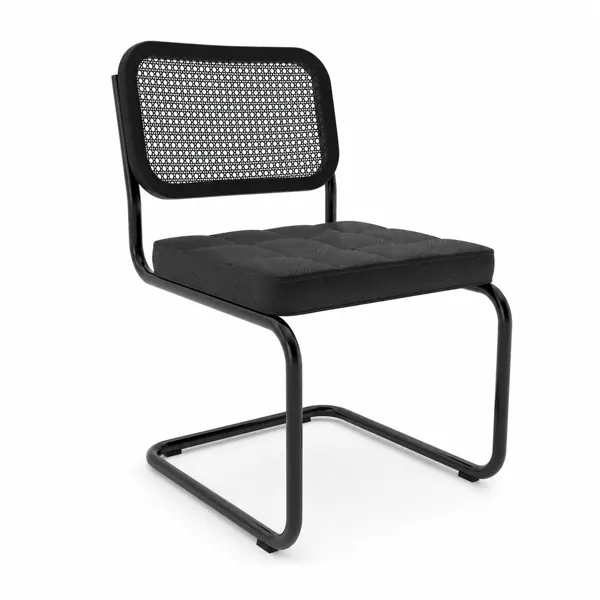
Dining chairs, café seating and waiting-area furniture are almost never placed once. They appear in fours, sixes, twelves, and the moment they repeat, a problem appears that does not exist for any single object: the eye is extremely good at spotting a pattern, and a room full of identical chairs stops looking like a room and starts looking like an array.
The first thing worth knowing is that not all chairs repeat equally badly. A moulded shell chair has a simple silhouette, and a rotation of a few degrees genuinely reads as a different object. A quilted or button-tufted chair does not — the stitching pattern is recognisable, and once the viewer has seen it twice they see it everywhere. When placing six of a heavily detailed chair, rotation alone is rarely enough.
What works better is varying the things a real room would vary. Chairs are never perfectly aligned: they sit at slight angles, pushed in to different depths, one pulled out further than the rest. Cushion compression differs because people of different weights sat in them. Upholstery catches light differently depending on how the nap was brushed. Small differences in roughness between chairs, a few centimetres of position offset, and a couple of degrees of rotation do far more than swapping colours, which tends to look deliberate rather than natural.
Height is the trap that catches people who have got everything else right. Dining chairs, counter stools and bar stools differ by roughly a hand's width at each step, and the difference is invisible when the chair is viewed alone. Placed against a table or counter of the wrong height, it is immediately obvious, though viewers often cannot say why the image feels off. Checking seat height against the surface the chair actually serves — rather than assuming a chair is a chair — prevents the most common single error in dining and café scenes.
Thin metal frames deserve a separate check at render time. Sled bases, wire frames and slim tapered legs can end up narrower than a single pixel at distance, which means they either vanish or alias into a shimmering line. This looks fine in a preview and wrong at final resolution, so it is worth confirming at output size rather than in the viewport, particularly when the seating sits in the background of a large commercial interior.
Mixing chair types is the other route, and in hospitality scenes it is usually the more realistic one. Cafés rarely furnish with a single model; they combine a few forms around different table sizes. Benches and soft seating along a wall break up the rhythm of loose chairs entirely, and they solve the circulation problem at the same time.
Dining chairs, stools, benches and soft seating in the Laruus catalogue are modelled and finished as complete pieces, so they can be mixed within one scene without the materials disagreeing.
130
Related assets from the catalogue
Ready-to-render models and seamless textures covering what this article discusses.
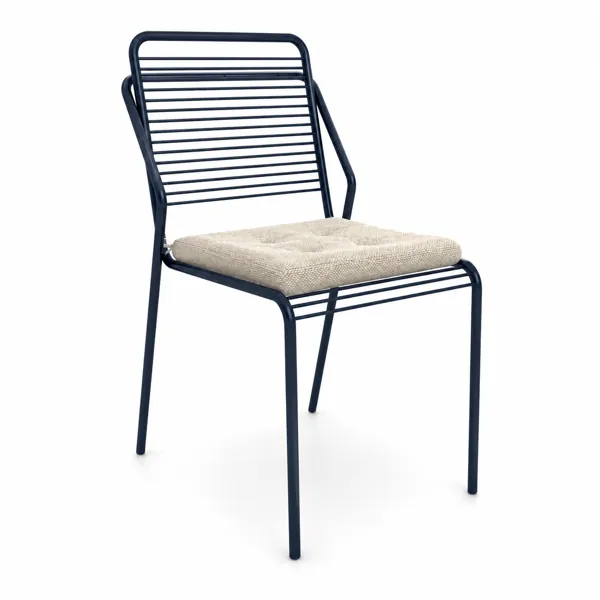
Navy Slatted Metal Chair – Beige Tufted Cushion 3D Model
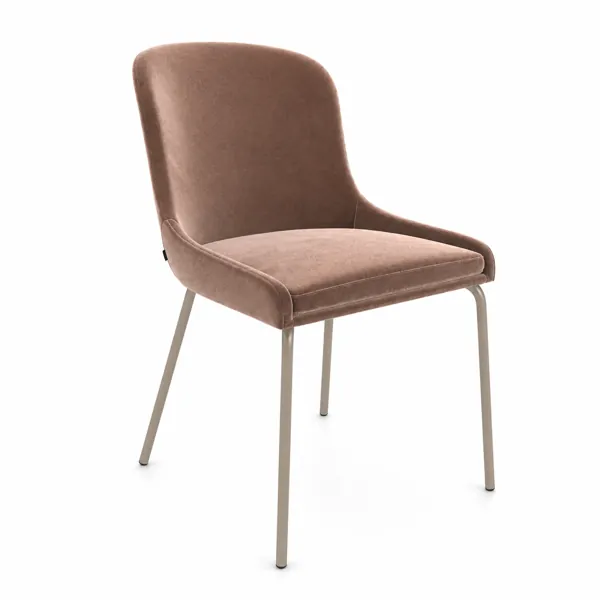
Dusty Rose Upholstered Chair – Beige Metal Legs 3D Model
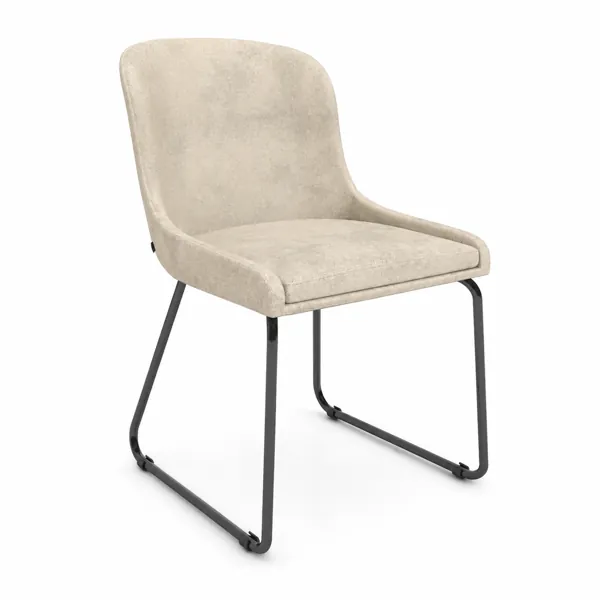
Beige Upholstered Sled Base Chair 3D Model
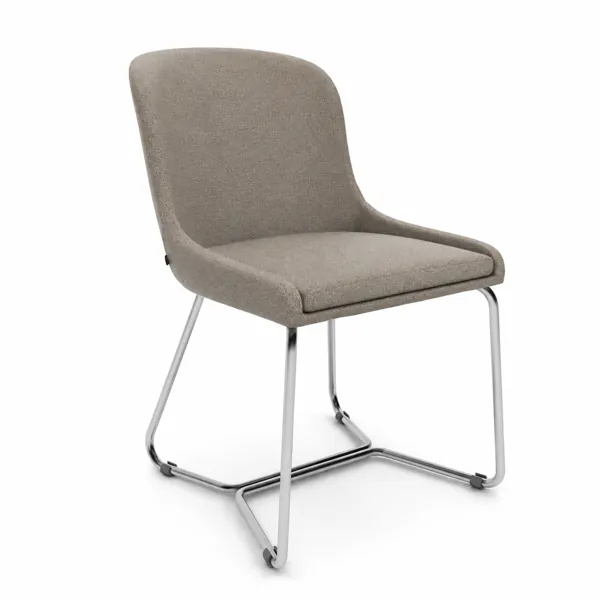
Taupe Upholstered Chrome Sled Base Chair 3D Model
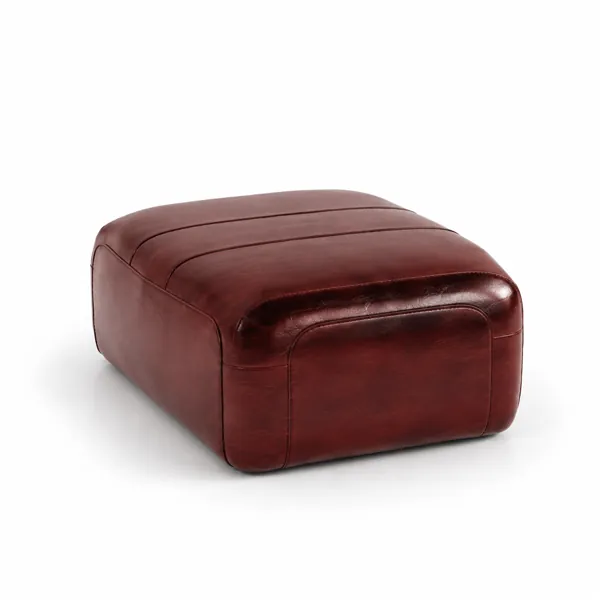
Burgundy Leather Channel Stitch Ottoman 3D Model
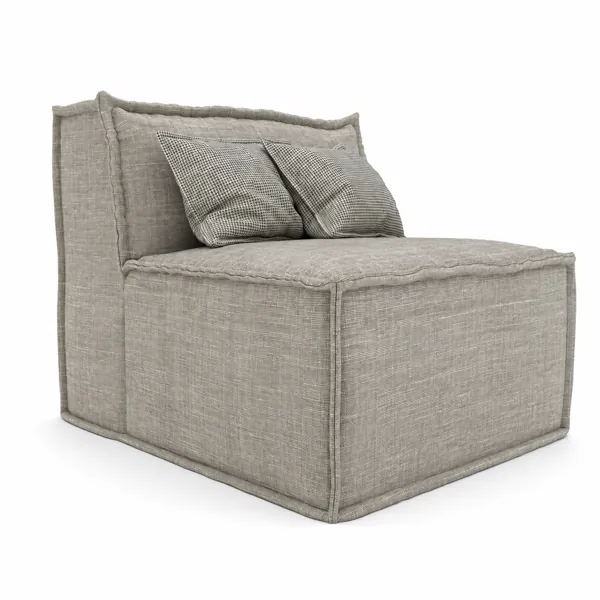
Boxy Fabric Lounge Chair – Warm Greige Exposed Seams 3D Model
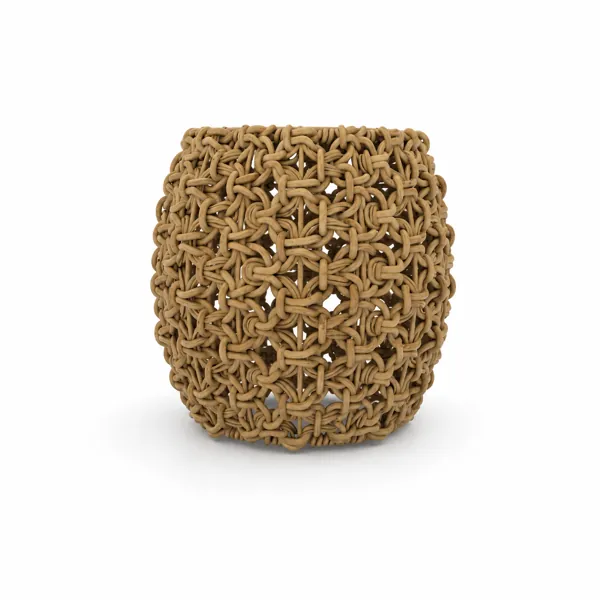
Natural Brown Open-Weave Wicker Stool 3D Model
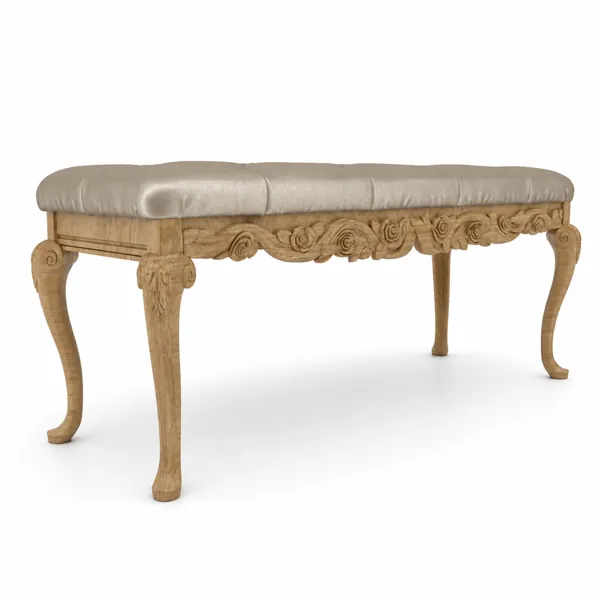
Classic Carved Wood Bench – Beige Upholstered Seat 3D Model