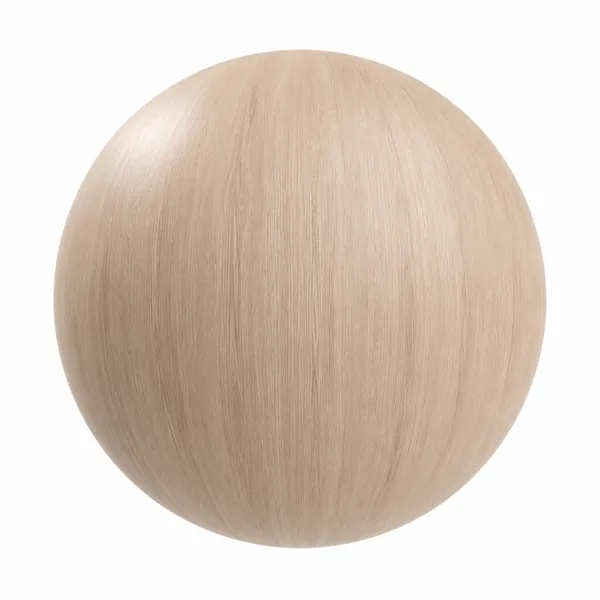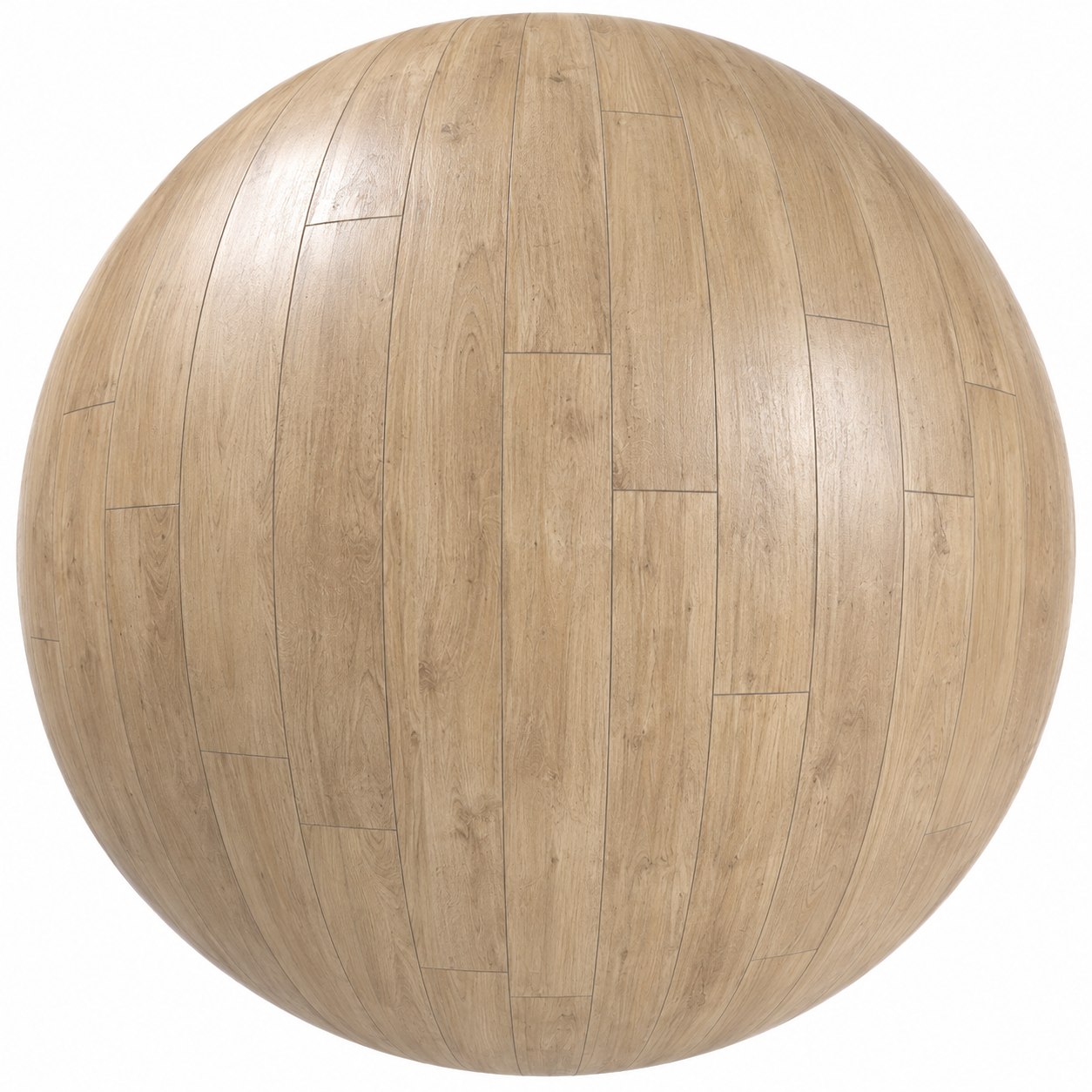
Light Beige Wood Parquet – Subtle Linear Grain Texture
Parquet No. 00010
FREE
Specifications
- Brand
- Laruus
- Style
- Modern
- Material
- Wood
- Suitable spaces
- Living Room, Bedroom, Office, Cafe, Commercial, Kitchen, Entrance
- Color
- BeigeBrown
- File types
- Albedo MapAlpha MapAO MapBump MapDiffuse Color MapEdge MapEmission MapHeight MapMetallic MapNormal MapPacked Texture MapRoughness Map
Soft Grain, Modern Warmth High Resolution Seamless PBR Textures
Description
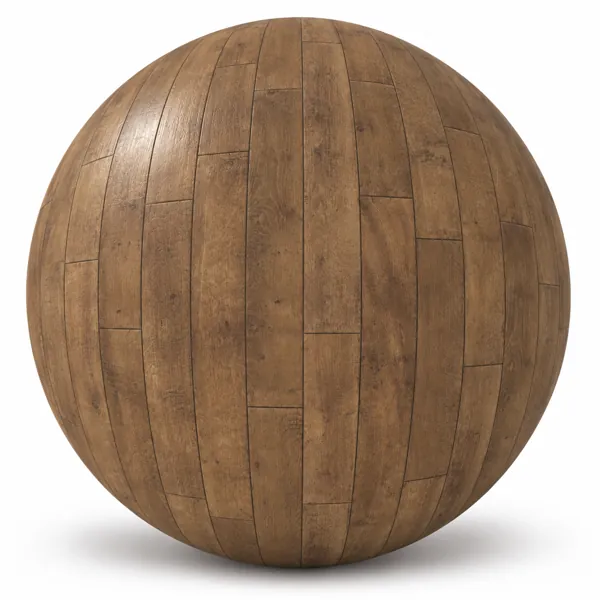
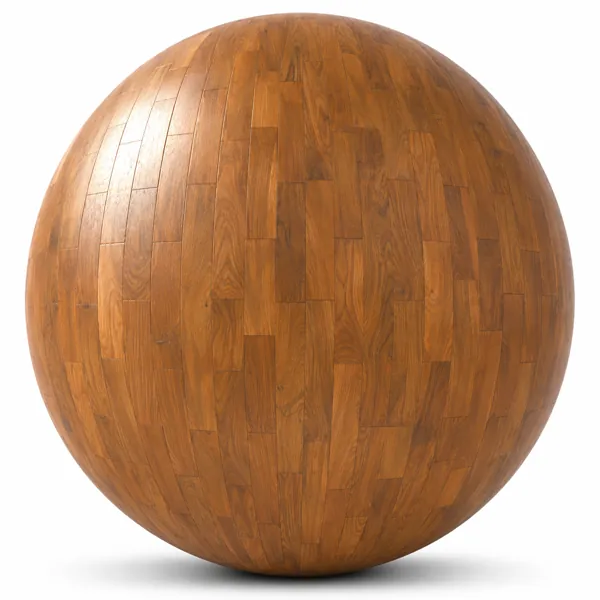
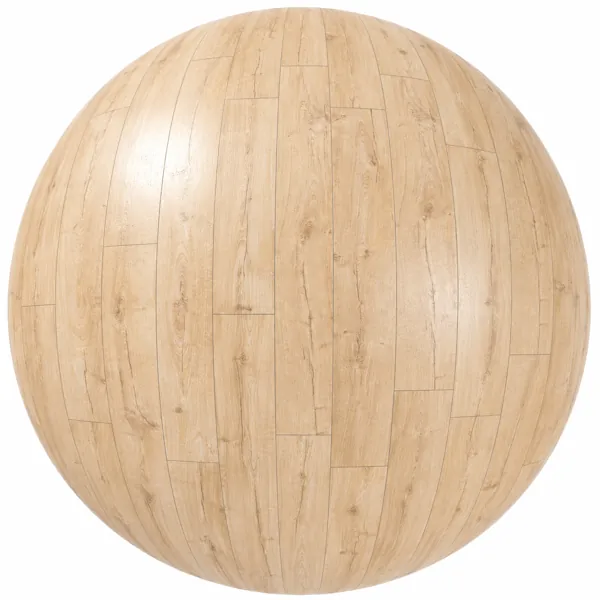
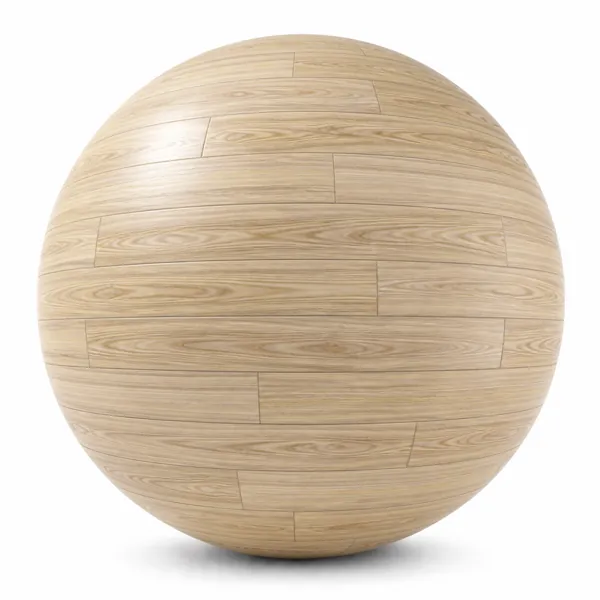
Light Beige Wood Parquet – Subtle Linear Grain is a wood flooring texture distinguished by its pale beige-brown palette, restrained natural grain and elongated plank arrangement. The surface presents a clean, contemporary character without losing the irregular details associated with real timber. Narrow dark seams define the individual boards, while staggered end joints prevent the floor pattern from appearing repetitive or overly geometric. Its relatively quiet color variation makes the texture especially suitable for modern interiors where the flooring should provide warmth without becoming the dominant visual element.
The visible construction is based on long rectangular wood planks with varied board lengths and offset joints. Grain direction generally follows the length of each plank, producing a strong linear rhythm across the surface. Subtle knots, small tonal shifts and organic grain markings introduce enough variation to distinguish neighboring boards. The overall appearance remains light and balanced, moving between beige and soft brown rather than displaying strong reddish, grey or dark timber tones. The rendered reference also suggests a smooth finished surface with controlled reflectivity, although an exact coating, gloss value or physical wood species cannot be confirmed from the image alone.
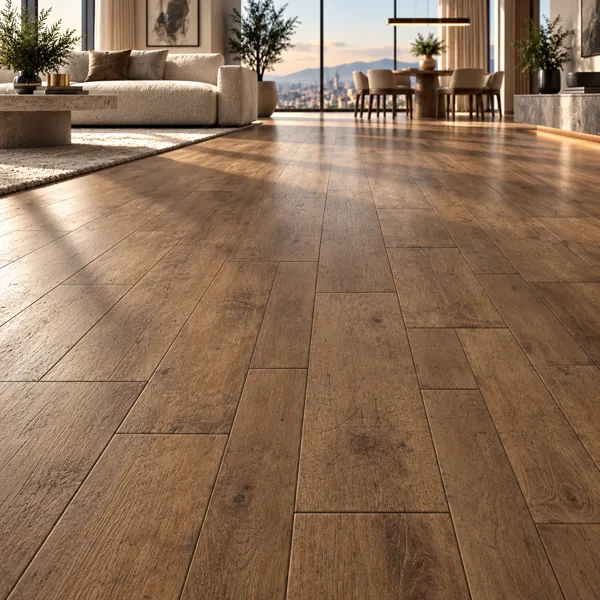
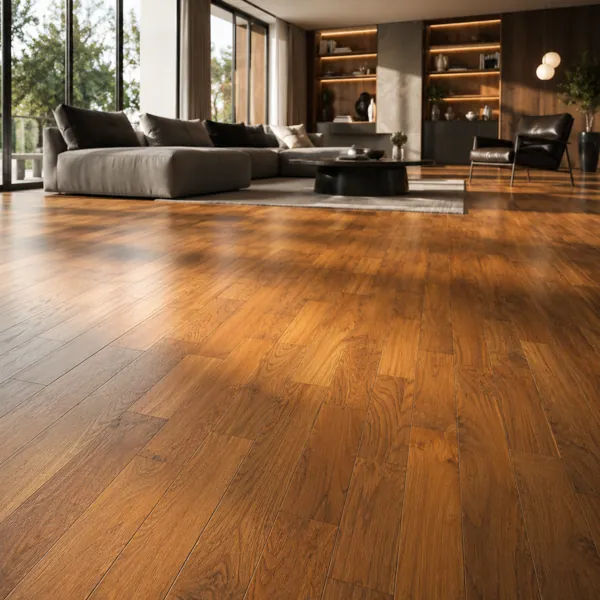
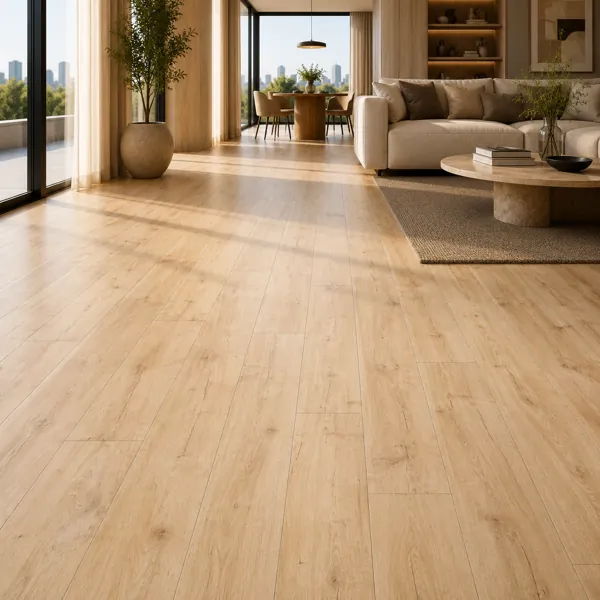
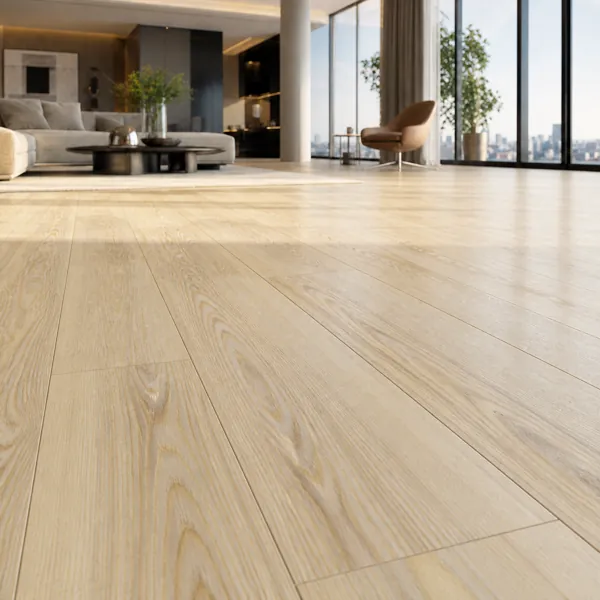
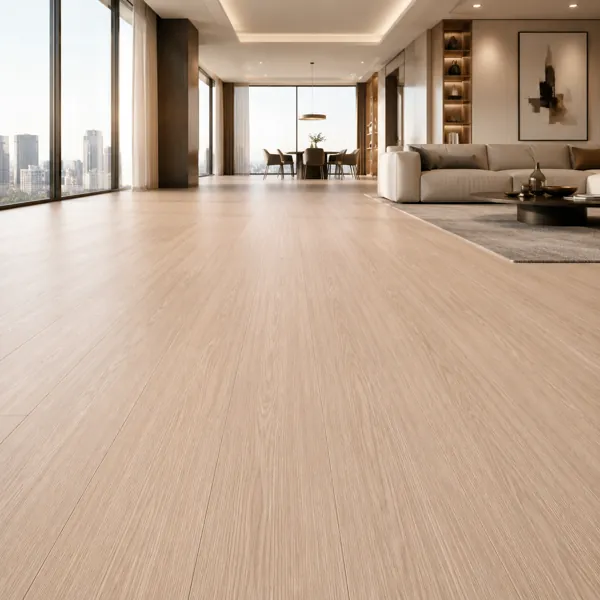
As an interior flooring material, this light wood parquet texture can work across Living Room, Bedroom, Office, Cafe, Commercial, Kitchen and Entrance settings. Its neutral coloring pairs naturally with minimalist furniture, pale walls, neutral fabrics, stone surfaces and darker accent materials. The elongated boards can visually reinforce the direction of corridors and open-plan spaces, while the understated grain is useful in larger rooms where an excessively busy floor pattern could compete with furniture, lighting or architectural features.
For architectural visualization and CGI workflows, the texture is suited to scenes that require recognizable wood flooring with clear plank boundaries and natural surface variation. It can support residential interiors, apartment visualizations, hospitality concepts, workplace imagery, retail environments and other contemporary archviz applications. The combination of staggered joints and changing grain details helps create a more believable flooring read in perspective views, close interior compositions and wider camera angles. It is particularly relevant when a visualization needs a light parquet floor that remains visually calm under bright interior lighting.
Within modern interior design, pale wood flooring is useful for maintaining an airy material palette while adding organic texture to otherwise clean architectural surfaces. This parquet pattern offers that balance through restrained contrast: board seams remain visible, yet the grain and color differences do not overwhelm the composition. It can complement Scandinavian-influenced, minimalist and contemporary spaces without requiring a strongly decorative floor treatment. Warm beige undertones also provide a softer transition between white architectural elements and brown or neutral furnishings.
The supplied product information identifies 3D's Max and Corona Renderer as the associated software and rendering environment. Exact texture resolution, physical dimensions, mapping scale, UV setup, included map channels and file formats are not visible in the reference image and therefore are not specified here. For accurate scene integration, mapping scale and material response should be adjusted according to the dimensions, lighting conditions and camera distance of the target visualization.
Frequently asked questions
Is this texture free?
Yes. You can download it with a free Laruus account. Free textures are limited to 5 downloads per day.
Which software can I use this texture in?
The maps are standard image files, so they work in any renderer with PBR materials, such as Corona or V-Ray in 3ds Max, Blender, SketchUp with V-Ray or Enscape, and Unreal Engine.
What do I get when I download it?
A 16.0 MB download. It was added to Laruus on June 24, 2026.
Which spaces is it suitable for?
It suits Living Room, Bedroom, Office, Cafe, Commercial, Kitchen, and Entrance projects. Style: Modern.
Are there 3D models that use this material?
Yes. Laruus has 3D models in the same material:
- Wood — 197Browse Armchairs (29)